
 English
 简体中文
 Español
 Français
 Deutsch
 Русский
 Português
 Italiano
 日本语
 한국어
 العربية
 Türkçe
 Tiếng Việt
 ไทย
 Indonesia
 Melayu

Tissue paper is the most inconspicuous material in the packaging chain, yet it directly shapes the unboxing experience. Its cost is minimal, but in the brand’s first physical contact with the consumer, it performs three functions: protection, decoration, and emotional signaling. For buyers, selecting tissue paper appears simple but actually involves multiple technical variables—GSM, sheet size, printing method, and compliance. This article maps out the key decision points from a practical standpoint.
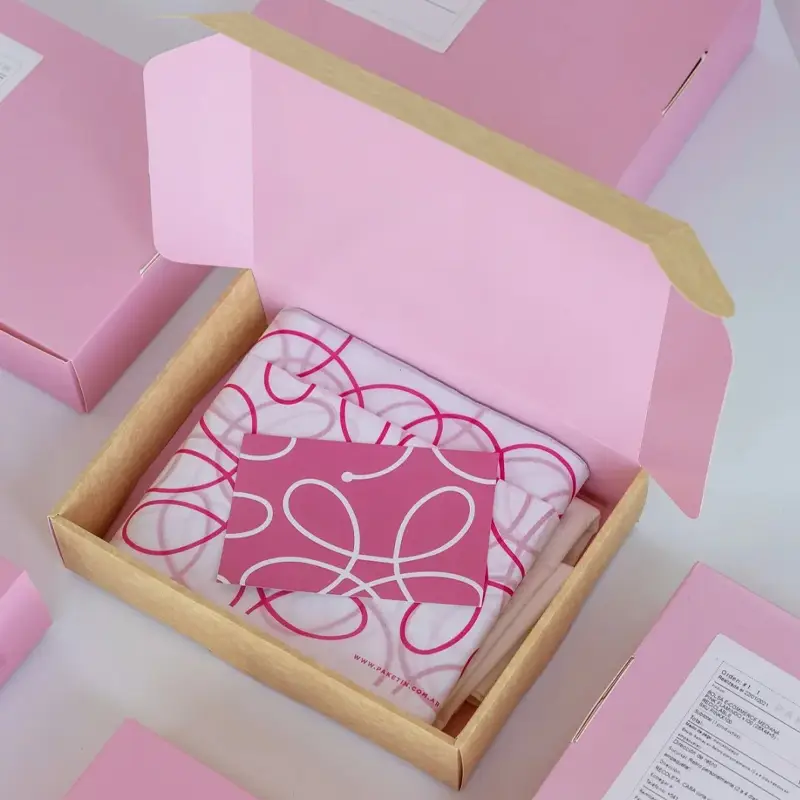
1. Types: Not All Tissue Paper Is Created Equal
Packaging tissue paper falls into several categories, distinguished by surface treatment and application:
MG Tissue (Machine Glazed): One side smooth, one side subtly textured. The smooth side provides a refined visual finish; the textured side adds friction to prevent slipping. GSM typically ranges from 14–17 GSM, suited for interleaving apparel, cosmetics, jewelry, and watches. This is the most common type in gift packaging.
Semi-Bleached CAP Tissue: Moderate cost, good strength, suitable for general wrapping. Color tends toward off-white or light tones.
Colored Tissue: Dyed on an MG base, available in black, white, kraft, and a range of spot colors for brand consistency or seasonal packaging.
Recycled Tissue: Made from recovered pulp, suitable for brands with sustainability targets. Note that recycled pulp typically has lower strength than virgin pulp; GSM may need to be adjusted upward accordingly.
2. GSM: Choose Wrong, and Everything Downstream Is Waste
Packaging tissue paper concentrates in the 17–33 GSM range. Below 17 GSM, the sheet is too thin—it tears easily during wrapping and ink strike-through becomes a problem. Above 33 GSM, the hand feel becomes stiff, losing the soft, enveloping quality that defines tissue paper.
A frequently overlooked fact: GSM directly affects print outcomes. At 17 GSM, the paper absorbs ink quickly and fine details can blur. For complex logos or large solid color areas, 22–30 GSM is recommended for more stable ink laydown and higher color saturation. Domestic suppliers typically support customization from 17g to 30g.
Don’t judge by the number alone. Two papers both labeled 17 GSM can differ significantly in hand feel and strength depending on pulp blend and calendering. Request physical samples and test tear strength by hand—that is the most direct assessment method.
3. Sizes: Standard Sheets Cover Most Needs; Customization Depends on MOQ

Common standard sheet sizes include:
- 50cm × 75cm (approx. 20“×30”), the most versatile size for gift wrapping
- 50cm × 30cm, suitable for small items
- 46cm × 61cm, 91cm × 61cm, for larger items or applications requiring more wrapping layers
Domestic suppliers also commonly offer 50×70cm, and support custom sizes up to 500mm × 1300mm. Roll format suits high-frequency packaging lines; sheet format is better for hand wrapping or small batches.
Practical sizing logic: A standard shoebox is usually covered by 50×75cm. For apparel or soft goods, a smaller size reduces waste. For irregular shapes or multi-layer wrapping, choose a larger sheet or roll format for self-cutting.
4. Printing: The Barrier to Custom Logos Is Lower Than You Think
The core constraint in tissue printing is low GSM and high ink absorbency—not every printing method applies.
The dominant custom printing solution is water-based ink, supporting up to 6 colors (Pantone spot or CMYK). Water-based inks are eco-friendly and odorless, suitable for packaging that directly contacts products. Metallic inks can achieve premium effects but cost more and require confirming whether the GSM can support them.
Two common design modes: Full Coverage for large brand-color areas, and Scatter Print for repeating logo patterns. If budget is limited, single-color centered logo printing is the most economical option with the lowest MOQ threshold.
Key reminder: Always request a digital proof before printing. Tissue paper’s ink absorbency causes deviation between screen color and printed color, especially for dark and vivid tones. Approving a proof before production prevents batch rejection.
5. Buying Guide: Five Questions You Must Confirm
1. Does the GSM match the actual use case?
For fine items (jewelry, watches), choose 17–22 GSM. For apparel or complex printed designs, choose 22–30 GSM.
2. Is FSC or recycled certification available?
Brands targeting the EU market need to address FSC certification and recycled content claims. The EU Packaging and Packaging Waste Regulation (PPWR) took effect in 2025 and sets explicit requirements for packaging recyclability. Tissue paper itself is generally recyclable, but printing inks and coatings may affect the recycling pathway.
3. What is the MOQ?
Domestic supplier MOQs vary widely. Some support orders from 50 sheets, suitable for startups or test runs; custom printed MOQs typically fall in the 100–500 piece range. Standard white or kraft tissue can be sourced at very low cost; once custom printing and spot colors are involved, unit price rises noticeably.
4. Is lead time controllable?
Standard printed tissue lead time is typically 4–6 weeks from artwork approval. For seasonal deadlines (Christmas, Valentine’s Day), capacity should be locked in early.
5. How do you calculate landed cost?
Tissue paper is a classic “bulky cargo”—large volume, low weight. In ocean freight, container space becomes the bottleneck before weight limits do. Don’t look only at FOB unit price. Ask the supplier for carton dimensions, units per carton, and 40HQ loading quantity to calculate actual logistics cost. A small adjustment in carton size can sometimes save more total cost than unit price negotiation.
Conclusion
The tissue paper purchasing decision is essentially a balancing act among protection, print performance, environmental compliance, and logistics efficiency. It isn’t expensive, but the hidden costs of getting it wrong—damaged wraps, print rework, customs delays—far exceed the price of the paper itself. For the brand, a sheet of tissue is the first tactile layer of the unboxing experience. For the buyer, it is a small variable in the supply chain that deserves to be taken seriously.