 English
 简体中文
简体中文 Español
 Français
 Deutsch
 Русский
 Português
 Italiano
 日本语
日本语 한국어
한국어 العربية
 Türkçe
 Tiếng Việt
 ไทย
ไทย Indonesia
 Melayu
Doing packaging box business, whether for export or domestic sales, product knowledge is the foundation. When a customer asks “What material is this box made of?” “Is it waterproof?” “How much weight can it hold?”—if you can’t answer, the order is gone. This article breaks down packaging box product knowledge into four dimensions: materials, structures, processes, and performance, helping you build a complete knowledge framework.
I. Materials: What the Box Is Made Of
1. Cardboard
White Cardboard
- Characteristics: White front, grey-white back, smooth surface, good printing results.
- Weight: Typically 230g-400g.
- Uses: Cosmetic boxes, pharmaceutical boxes, food boxes, gift boxes.
- Price: Medium-low.
Art Paper / Coated Paper
- Characteristics: Double-sided coating, smooth surface, high color reproduction.
- Weight: Typically 128g-300g.
- Uses: Color boxes, brochures, labels.
- Price: Medium.
Specialty Paper
- Characteristics: Textured surface (cloth, leather, stone), strong texture, various colors.
- Weight: Typically 120g-300g.
- Uses: High-end gift boxes, brand packaging.
- Price: Higher.
Kraft Paper
- Characteristics: Natural brown-yellow color, high strength, strong eco-friendly feel.
- Weight: Typically 80g-200g.
- Uses: Food packaging, agricultural products, handicrafts, eco-friendly brands.
- Price: Low.
Grey Board / Chipboard
- Characteristics: Made from recycled paper pulp, thick, hard, not directly printed.
- Thickness: Typically 1mm-3mm.
- Uses: Inner skeleton for rigid boxes, wrapped with surface paper.
- Price: Low.
2. Corrugated
Corrugated Board
- Structure: Composed of top liner, bottom liner, and a wavy corrugated medium in between.
- Flute types:
- E-flute: Thinnest, about 1.1-1.5mm, flat surface, suitable for printing, used for retail display boxes.
- B-flute: About 2.5-3mm, good hardness, used for transport packaging.
- C-flute: About 3.5-4mm, good cushioning, used for medium packaging.
- BC-flute: Double-wall corrugated, about 6-7mm, strongest compression resistance, used for heavy products.
- Uses: Shipping boxes, e-commerce packaging, heavy product packaging.
- Price: Low to medium.
3. Specialty Materials
PET/PVC Clear Boxes
- Characteristics: Transparent, strong display appeal, waterproof.
- Uses: Toys, stationery, small accessories, electronics.
- Price: Medium.
Biodegradable Materials
- Types: Bagasse, bamboo fiber, PLA (polylactic acid).
- Characteristics: Eco-friendly, compostable, but usually lower strength than traditional materials.
- Uses: Brands emphasizing sustainability, food packaging.
- Price: Higher.
Leather/Fabric
- Uses: Rigid box surface paper, high-end gifts, jewelry, spirits.
- Price: High.
II. Structures: How the Box Is Assembled
1. Folding Carton
- Structure: A single sheet of cardstock is die-cut and folded into shape. Shipped flat.
- Common types:
- Tuck End: Top and bottom tuck flaps, the most common color box structure.
- Snap Lock Bottom: Bottom auto-locks, better load-bearing.
- Aviation Box / Mailer Box: One-piece, no glue needed, suitable for e-commerce direct shipping.
- Advantages: Low cost, space-saving transport.
- Disadvantages: Weak compression resistance.
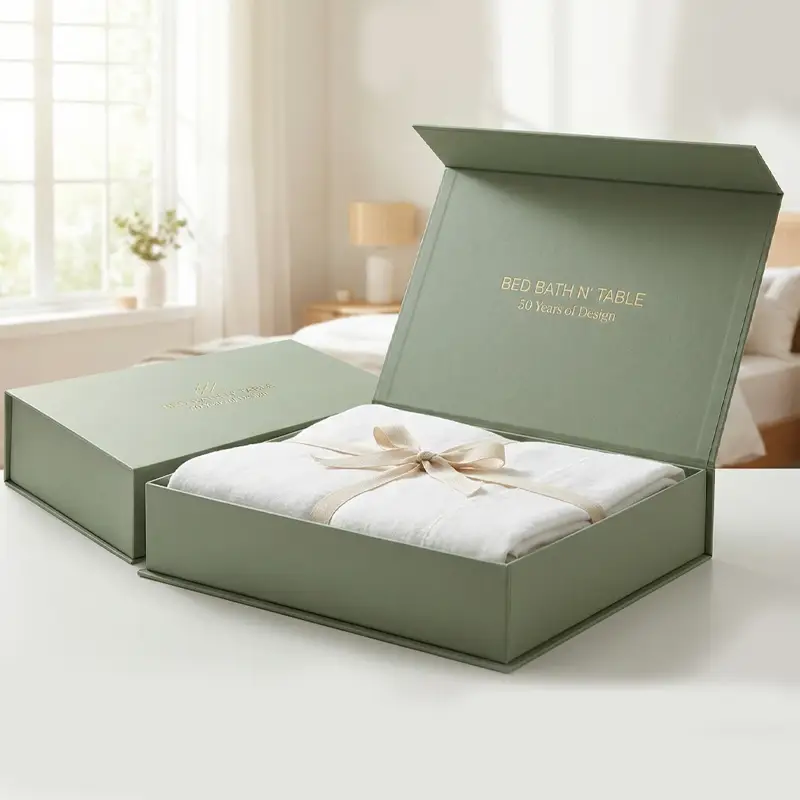
2. Rigid Box
- Structure: Grey board skeleton wrapped with surface paper, non-foldable.
- Common types:
- Lid and Base: Two separate box bodies, classic high-end structure.
- Drawer Box: Outer sleeve + inner drawer, push-pull opening.
- Magnetic Box: Flip-top with built-in magnets.
- Flip-Top: Book-style opening.
- Advantages: Strong texture, high hardness, suitable for high-end products.
- Disadvantages: High cost, bulky transport.
3. Corrugated Box
- Structure: Corrugated board die-cut and folded, can be shipped flat.
- Common types:
- Regular Slotted Container (RSC): Top and bottom flaps, most common shipping box.
- Lid and Base Corrugated Box: Separate top and bottom, used for display.
- Custom Corrugated Box: Custom die-cut, for special products.
- Advantages: Compression resistance, cushioning, low cost.
- Disadvantages: Limited printing precision, appearance inferior to cardstock boxes.
4. Insert
- Function: Fix the product, cushion and shock-proof, enhance unboxing experience.
- Common materials:
- Paper Tray: Die-cut cardstock or corrugated folded into shape, low cost, eco-friendly.
- EVA Foam: Soft, good cushioning, used for electronics, jewelry.
- Flocking: Velvet surface, used for high-end gifts.
- Blister: Transparent plastic molding, used for small accessories.
III. Processes: How the Box Becomes Beautiful
1. Printing Processes
- Offset Printing: Most common, good color reproduction, suitable for large volumes.
- Digital Printing: No plate needed, suitable for small batches, personalization.
- Screen Printing: Thick ink layer, suitable for special effects like raised UV.
- Flexo Printing: Used for corrugated boxes, low cost, average precision.
2. Surface Treatments
- Lamination: Covering with a plastic film, gloss or matte. Gloss is shiny, matte has strong texture.
- Varnishing: Coating with transparent oil, gloss or matte, lower cost than lamination.
- Spot UV: Applying UV oil in specific areas for high-gloss contrast.
- Hot Stamping: Heat-pressing metallic foil for gold or silver effect.
- Embossing / Debossing: Using molds to press raised or recessed patterns for 3D effect.
- Die-Cutting: Cutting specific shapes with a die, such as windows or irregular shapes.
- Texturing: Pressing textures with a roller, such as cloth or leather grain.
3. Forming Processes
- Gluing: Machine or hand gluing into shape.
- Wrapping: Surface paper wrapping for rigid boxes, usually done by hand.
- Assembly: Assembly of inserts, magnets, ribbons, and other accessories.
IV. Performance: What the Box Can Withstand
1. Load-Bearing
- Folding Cartons: Typically 1-3kg, not suitable for heavy items.
- Corrugated Boxes: E-flute about 5kg, B-flute about 10kg, BC-flute can reach 20kg+.
- Rigid Boxes: Depends on grey board thickness, typically 3-10kg.
2. Compression Resistance
- Corrugated Boxes: Strongest, BC-flute can stack 10+ layers.
- Folding Cartons: Weak, prone to deformation when stacked.
- Rigid Boxes: High hardness, but surface scratches easily.
3. Waterproof and Moisture Resistance
- Lamination: Some waterproof capability, but long-term soaking will seep through.
- Varnishing: Weaker waterproofing than lamination.
- Corrugated Paper: Not waterproof, strength drops sharply when damp.
- PET/PVC: Completely waterproof.
4. Eco-Friendliness
- FSC-Certified Paper: From sustainably managed forests.
- Recyclable: Cardboard, corrugated paper, kraft paper are recyclable.
- Biodegradable: Bagasse, bamboo fiber, PLA are compostable.
- Non-Recyclable: Laminated cardstock, PVC, EVA foam.
V. Quick Reference for Common Questions
| Customer Question | Key Points |
|---|---|
| How much weight can this box hold? | Folding cartons 1-3kg, corrugated boxes 5-20kg, rigid boxes 3-10kg |
| Is it waterproof? | Lamination resists splashes; long-term waterproofing needs PET/PVC |
| Can you do small batches? | Digital printing starts at 1; traditional printing starts at 3,000 |
| What’s the lead time? | Folding cartons 7-15 days, rigid boxes 15-25 days, corrugated boxes 7-12 days |
| Can you do eco-certifications? | FSC, REACH, recyclable, biodegradable—depends on material |
| How much color deviation? | Printing color deviation ΔE<3 is acceptable |
| Can you do irregular shapes? | Yes, requires mold, die-cutting plate fee extra |
| Will it crush during shipping? | Depends on flute type and stacking; compression testing recommended |
Summary
The core of packaging box product knowledge is four things: what material to use (materials), what shape to make it (structures), how to make it beautiful (processes), and what it can withstand (performance).
Master these four dimensions, and you can answer any customer question, quote with confidence, and have a standard for judging suppliers. Product knowledge isn’t memorized—it’s accumulated through sampling, inspections, and customer feedback.