
 English
 简体中文
简体中文 Español
 Français
 Deutsch
 Русский
 Português
 Italiano
 日本语
日本语 한국어
한국어 العربية
 Türkçe
 Tiếng Việt
 ไทย
ไทย Indonesia
 Melayu
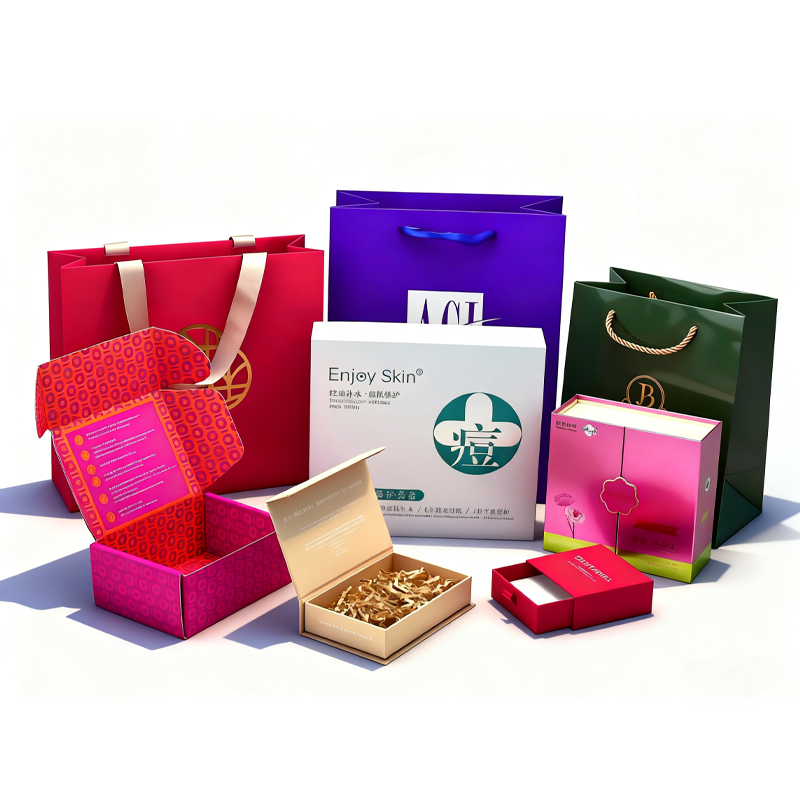
In the production of customized beauty packaging, the fitting effect of inner trays inside lipstick tube packaging boxes has always been a key detail valued by major brands. After confirming exterior designs and printing styles, many merchants encounter frequent inner liner fixing failures during mass production. Lipstick tubes shift randomly, paint surfaces get worn during transportation, and even daily picking and placing become unsmooth. Such adaptation issues are never simple dimensional calculation errors, but the combined result of physical material properties, stamping precision and dimensional design logic, which are also practical points that need to be sorted out urgently in current cosmetic packaging production.
Physical Causes of Unstable Lipstick Box Liner: Analysis of EVA Density and Compression Deformation Rate
Most unstable clamping problems of inner liners firstly stem from improper material selection. Different polymer liner materials differ greatly in density range, resilience coefficient and long-term compression deformation performance. Choosing raw materials merely based on price will easily lead to large-scale quality hidden dangers. EVA foam is the most widely used base material in mass production of cosmetic packaging inner liners, and its density range directly affects the final use effect, with the industry preferred density ranging from 38° to 45°.
EVA with excessive density is hard in texture, which is easy to leave scratches on matte and glossy lipstick tube surfaces when in contact; low-density soft EVA lacks sufficient supporting force and deforms easily after single stress, failing to fix cosmetic tubes stably for a long time. In contrast, ordinary low-cost sponges feature loose internal structure and poor deformation resistance. Their inner holes expand continuously after repeated use, and eventually lose clamping function completely.
Refer to these core judgment points when selecting liner materials:
- Check factory density parameters strictly and reject materials beyond 38°-45° standard range
- Test resilience by pressing manually, materials with slow rebound tend to deform and loosen rapidly
- Inspect surface texture roughly, coarse porous liners have weak protection and stability
We have sorted out core technical parameters of mainstream inner liner materials to show practical performance differences clearly:
| Core Index | Economy Sponge | Standard EVA (38°) | Laser Die-cut + Negative Tolerance EVA |
|---|---|---|---|
| Machining Tolerance | ±0.5mm | ±0.2mm | ±0.05mm |
| Clamping Durability | Less than 50 times insertion & extraction | More than 500 times insertion & extraction | More than 2000 times insertion & extraction |
| Tube Protection Level | Prone to friction heat generation | Good protection effect | Excellent protection (support anti-static treatment) |
| Unit Cost Ratio | 1.0 | 1.5 | 1.8 |
Laser Die-cut VS Manual Die-cut: How ±0.05mm Precision Determines Mass Production Yield
After confirming material selection, precision errors generated in die-cutting processing become the core factor affecting the overall adaptation consistency of makeup lipstick packaging box inner trays. Inner hole sizes made by different die-cutting processes have obvious batch differences, which explains why some finished products fit tightly while others shake loosely in the same batch.
Traditional manual die-cutting features simple production procedures and low costs, yet it cannot control fine dimensions, with overall machining errors ranging from 0.2mm to 0.5mm. The specifications of mass-produced inner liners are uneven, making it hard to raise qualified product rate steadily. In comparison, fully automatic laser die-cutting stamping can stabilize overall machining accuracy within ±0.05mm, unifying inner hole specifications of all liners from the production end and keeping fitting feel consistent among all finished goods.
Fully automatic laser die-cutting brings prominent advantages in mass production:
- Extremely narrow dimensional error scope, ensuring unified specifications of all products in one batch
- Low die wear rate, no dimensional deviation even after long-time continuous production
- Smooth and neat cutting surface, no burrs to scratch lipstick tube bodies
In terms of practical application results, when Scaibox undertook an order of 500,000 sets of slim lipstick packaging for a well-known top-tier cosmetic brand, we replaced all original manual dies with full-automatic laser die-cutting production lines. Consequently, the customer complaint rate related to product adaptation dropped directly from 3.2% to 0.01%, greatly improving product reputation and delivery efficiency.
Exclusive Scaibox Skills: 0.5mm Negative Tolerance Compensation and Quantified Damping Standard
To achieve smooth and stable using experience of inner liners inside lipstick tube packaging boxes, simply matching the actual tube diameter is far from enough. Reasonable application of negative tolerance dimensional design is the core method. The standard outer diameter of mainstream lipsticks in the industry is 20mm. Based on our years of mass production experience, designing the formed inner hole of liners as 19.5mm is the most suitable choice. The reserved 0.5mm compression space can form natural clamping force relying on EVA resilience, creating comfortable damping feeling favored by most users.
If flocking treatment is added on liner surfaces, the extra thickness brought by flocking layers must be taken into consideration. Single-sided flocking will increase the overall thickness by 0.1mm to 0.2mm, so the corresponding value needs to be deducted in advance during die-cutting drawing design to avoid difficult insertion and extraction in later use.
To solve the piston effect caused by 0.5mm negative tolerance, which refers to unsmooth insertion and ejection due to excessive internal air pressure, we usually suggest designing tiny air vents at the bottom of EVA liners. These vents eliminate air resistance in closed space and make picking and placing lipsticks more effortless.
Adopt differentiated tolerance design for various lipstick styles:
- Regular thick lipsticks: Follow the standard 0.5mm negative tolerance design to fit common daily cosmetic tubes
- Slim lipstick tubes: Reduce compression amount to 0.3mm to prevent hard extrusion from damaging slim tube appearance
- Special-shaped cut lipstick tubes: Customize hole shapes based on physical samples instead of adopting universal standard sizes
2026 Cosmetic Packaging Compliance Guide: Anti-scratch and Environmental Standards for Polymer Liner Materials
In 2026, the requirements for liner materials in the cosmetic packaging industry are no longer limited to fixing and fitting functions. Upgraded anti-scratch technology and eco-friendly material compliance have become mainstream industry trends. When customizing cosmetic lipstick tube storage boxes, most brands will prioritize checking whether liner raw materials meet current universal environmental testing standards, ban harmful additives and ensure overall product safety.
Three essential compliance checks shall be completed before liner production:
- No pungent odor, raw materials free of harmful chemical additives
- Qualified surface protection performance to resist abrasion from daily use and transportation
- Biodegradable performance conforming to updated industry green packaging regulations
In terms of surface protection, high-quality EVA liners with soft polishing and anti-static treatment can minimize friction damage during tube insertion and extraction, perfectly matching electroplated, painted and frosted high-grade lipstick tube surfaces. Meanwhile, degradable modified liner materials are gaining increasing popularity, which satisfy packaging functional demands and conform to the prevailing green packaging market trend, making customized packaging practical and fully in line with new industry regulations.
FAQ: Common Tolerance Matching and Storage Risks in Lipstick Tube Packaging Customization
Q: When calibrating sizes for lipstick packaging inner liners, should we refer to the outer diameter of tube mouth or the main tube body diameter first?
A: The maximum outer diameter of the main lipstick tube body must be taken as the core design standard. Most lipstick tube mouths have narrowed edges, and designing liners based on such data will easily lead to overall fitting deviation.
Q: How to prevent long-term stored bulk inner liners from softening and deforming in advance?
A: Prioritize qualified brand-new EVA raw materials and avoid low-cost liners made of recycled materials. Meanwhile, control temperature and humidity in storage warehouses, keep goods away from humid and high-temperature places to slow down natural aging and deformation of materials.
Q: Is it necessary to adjust die-cutting processes for small-batch sampling and large-scale mass production?
A: Simple dies can be used for small-batch trial production to quickly confirm styles and layouts. Once entering formal mass production, high-precision laser dies must be adopted to ensure unified tolerance and consistent adaptation effect of all goods.
Q: What extra details should be noticed in liner design for magnetic gift box style lipstick tube packaging boxes?
A: Apart from conventional tolerance design, reserve enough overall thickness space matching magnetic closing structure, preventing over-thick liners from affecting normal closure of gift boxes.
In most packaging customization cooperations, clients always focus on exterior design, color printing and gift box structure, while easily ignoring internal details like inner liners. Nevertheless, these subtle details directly determine terminal user experience and brand market reputation. Shengcai has been engaged in customized packaging manufacturing for years. Supported by mature die-cutting precision management systems and complete material screening procedures, we can tailor exclusive inner liner structures for lipsticks of different styles and specifications. We follow up the whole process including preliminary dimensional measurement, process selection and mass production quality control, and solve various common problems such as loose fitting, jamming and surface scratching thoroughly, enabling every customized lipstick tube packaging box to achieve perfect combination with cosmetic products.