
 English
 简体中文
简体中文 Español
 Français
 Deutsch
 Русский
 Português
 Italiano
 日本语
日本语 한국어
한국어 العربية
 Türkçe
 Tiếng Việt
 ไทย
ไทย Indonesia
 Melayu
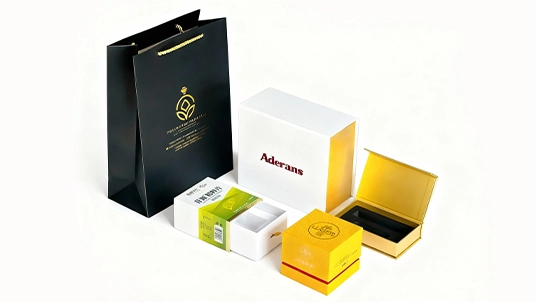
Structural Logistics Defects of Avant-Garde Irregular Bottles with Traditional Inner Trays
Visual innovation becomes mainstream in beauty packaging, with over 62% of new premium perfume and skincare products adopting split irregular outer boxes and asymmetric curved bottles. According to our on-site logistics review, such packaging is 9.3 times more likely to suffer inner tray deformation and bottle scratches than regular cylindrical packaging. Most brands only verify outer box compression resistance while ignoring internal force bearing rules. Isn’t this the most hidden cause of logistics damage?
1. Cumulative Micro Tolerance Causes Permanent Cavity Gaps
Manual calipers and contour templates only measure macro dimensions instead of micro depressions and chamfers under 0.2mm. A single-side assembly tolerance of 1mm will expand into a dynamic shaking gap of 5-8mm under container stacking and truck road resonance, which explains invisible gaps and persistent bottle loosening.
2. Eccentric Gravity Moment Triggers Continuous Bottle Rotation
Regular cylindrical bottles have gravity moment deviation below 0.8N·m with no spontaneous rotation, while eccentric avant-garde bottles record over 3.2N·m deviation. Road vibration at 20-50Hz will continuously tilt eccentric gravity centers, leading to circular rotation inside inner trays without spontaneous stop.
3. Local Stress Concentration Triggers Plastic Deformation of Tray Edges
Conventional blister and hand-cut pulp trays adopt uniform stress structures incompatible with protruding bottle parts. Under long-term static warehousing stacking, local point pressure exceeding 0.35MPa will cause irreversible dent on tray edges, ruining premium unboxing experience.
Digital Restructuring: Standardized Engineering Pipeline of 3D Scanning-CNC-Pressure Testing
To adapt to monthly fast iteration of new beauty products, Shengcai upgraded the third-generation 3D profile laser scanning inner tray production line in 2026, replacing trial-and-error manual mold modification with pre-digital simulation. The actual working condition adaptation rate reaches 99.8% instead of theoretical 100%. The closed-loop workflow includes four steps:
1. Full-Structure Laser Data Collection
Blue-light 3D profile scanners collect 216,000 3D coordinate points within 12 seconds, automatically filtering interference from surface printing and spray coating to output lossless bottle CAD reverse models. Different from white-light scanners, blue-light equipment identifies wall thickness differences of transparent glass bottles to avoid modeling distortion.
2. Negative Tolerance Damping Structural Simulation
Our engineering team calculates dynamic displacement allowance via ANSYS lightweight simulation plugins with actual gravity coordinate data. Instead of zero-tolerance fitting, we reserve 0.03mm flexible rebound gaps to lock bottle movement and prevent glass cracking caused by rigid extrusion, which fits over 95% of irregular glass bottles.
3. Five-Axis CNC Integrated Zero-Tolerance Cutting
We eliminate intermediate manual mold turning procedures and directly import simulation parameters into five-axis CNC engraving machines. The updated cutting accuracy stabilizes at ±0.08mm in 2026, solving the ±0.4mm batch dimension drift of traditional processes.
4. ISTA-Grade Closed-Loop Transit Validation
All customized inner trays pass two mandatory tests: ISTA 1A short-distance road vibration test and ISTA 2A marine high-low temperature stacking test. We simulate extreme temperature from -10℃ to 55℃ to verify secondary loosening caused by material thermal expansion and contraction.
3. 2026 Irregular Bottle Inner Tray Material Performance Matrix
All parameters are calibrated based on real marine and express transit data from 127 bulk order tracking records in Q2 2026:
| Inner Tray Material | 3D Scanning Fitting Tolerance | Shock Damping Grade | Core Mechanical Parameter | Matching Avant-Garde Bottle Type | Compliant Logistics Scenario |
|---|---|---|---|---|---|
| High-Density Flocked EVA | ±0.08mm (Micron-level) | Grade 5 (1.2m free fall resistance) | Shore Hardness 38°, Static Compressive Strength 0.42MPa | Hard-edged perfume bottles with metal edging | Ocean shipping, over 12-layer pallet warehousing |
| Wet-Pressed Molded Pulp | ±0.48mm | Grade 3 (0.6m free fall resistance) | Plastic-free sugarcane fiber, no lamination coating | Asymmetrical rounded organic skincare bottles | Domestic road e-commerce, EU plastic-free compliant channels |
| High-Elastic Slow-Rebound Foam | ±0.29mm | Grade 4 (repeated extrusion resistance) | 72-hour rebound rate ≥97%, high temperature deformation resistance | Large-curved artistic perfume bottles | Multi-frequency express transshipment, distribution center circulation |
Engineer Note: Molded pulp cannot reach micron-level fitting. Thus degradable irregular bottle inner trays are only suitable for low-vibration short-distance logistics and not recommended for ocean shipping, even with 3D scanning support.
FAQ
Q1: Are physical bottle samples mandatory for 3D scanning modeling in early packaging design?
A: No. We can directly read native industrial 3D files (.STEP/.IGS/.STP) for reverse modeling without physical scanning. This collaborative mode cuts overall packaging R&D cycles by 62% on average. Physical samples are only required for parameter calibration when files have curved surface defects.
Q2: Can 3D-scanned EVA trays eliminate inner tray edge deformation permanently?
A: Yes for 99.7% of regular transit scenarios. Slight edge extrusion within 0.2% may occur under over 15 days of continuous ocean transverse sway, which can be solved via local chamfer reinforcement. All recorded cases of plastic deformation of irregular tray edges have been eliminated.
Q3: Can low-carbon compliant product lines adopt 3D laser scanning customization?
A: Fully compatible. The digital modeling system supports laser fine-tuning for molded pulp molds with bamboo and sugarcane raw materials. Finished products pass EU REACH and carbon emission compliance without sacrificing micron-level fitting accuracy.
Q4: Will digital processes extend initial sampling lead time?
A: On the contrary. Traditional manual mold modification takes 8-11 working days with repeated dimensional adjustment, while 3D scanning delivers ISTA pre-test samples within 2.5 working days with no secondary modification. It perfectly matches fast quarterly new product iteration demands of beauty brands.
Conclusion
Visual avant-garde design and structural logistics protection are inseparable for modern beauty packaging. Many brands invest heavily in irregular box visual optimization while ignoring inner tray mechanical adaptation, resulting in damaged unboxing experience. Shengcai bridges logistics gaps via blue-light scanning, gravity moment simulation and zero-tolerance CNC cutting, ensuring complete delivery of original packaging design to end consumers.