
 English
 简体中文
简体中文 Español
 Français
 Deutsch
 Русский
 Português
 Italiano
 日本语
日本语 한국어
한국어 العربية
 Türkçe
 Tiếng Việt
 ไทย
ไทย Indonesia
 Melayu
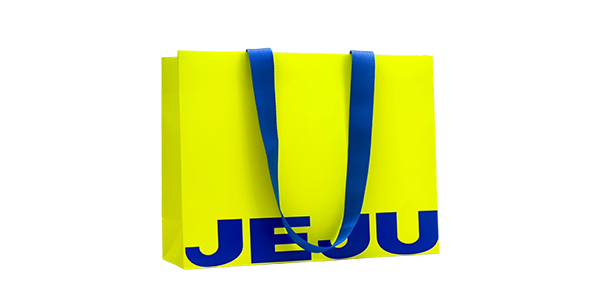
Under rainy weather conditions and closed humid storage environments, various commercial gift paper bags are prone to glue separation and bottom shedding. Many bulk purchasers often face the problem that intact-looking paper bags crack at the bottom once loaded with goods. To solve this practical problem fundamentally, it is essential to dig deep into the principle of material adhesion, optimize the bottom load-bearing structure, and adopt mature production techniques to adapt to diverse and complex application environments.
Root Causes of Paper Bag Bottom Shedding: Hydrophilicity of Water-based Glue and Surface Energy Limitation of BOPP Film
Most conventional laminated gift paper bags adopt BOPP lamination to enhance appearance texture and surface water resistance. Nevertheless, this laminated material features low surface energy with smooth and dense paper surface, making it hard for ordinary adhesives to penetrate into the internal fiber structure of paper, and it can only be fixed by surface molecular force.
Common water-based PVAc white latex widely used in the market is highly hydrophilic. Moisture in the air continuously invades the inner part of the adhesive layer and gradually destroys the cured structure of the glue. Even a slow rise in ambient humidity will keep reducing the toughness of the adhesive layer. Once combined with external forces such as goods pulling and stacking extrusion, the bonded parts at the bag bottom will separate rapidly. Most people only know that dampness causes glue peeling, yet they ignore that ambient condensed moisture is an invisible factor accelerating the failure of adhesive layers.
Upgrading from White Latex to MHM/PUR Hot Melt Adhesive: Technical Iteration of Adhesives for High-humidity Environments in 2026
With the continuous upgrading of packaging industry material standards, the market has completed multiple rounds of iteration on adhesives by 2026. Traditional white latex can no longer meet the demands of multi-scenario commercial packaging. From basic water-based glue to general hot melt adhesive, and further to current moisture-curing special adhesives suitable for full-humidity environments, there are obvious gaps in applicable scenarios and durability among different adhesives.
As part of the scaibox packaging system, Shengcai takes the lead in popularizing MHM and PUR moisture-curing hot melt adhesives in mass production of moisture-proof gift paper bags, completely breaking away from the disadvantage that traditional glue performance is restricted by humidity.
Comprehensive Performance Comparison Table of Adhesion Solutions
| Adhesion Solution | Core Glue Component | Critical Failure Humidity (RH) | Load-bearing Safety Margin | Production Yield Control | Manifestation at Failure Critical Point |
|---|---|---|---|---|---|
| Basic Type | PVAc Polyvinyl Acetate | Humidity exceeds 75% for 48 consecutive hours | 10% | Uneven manual gluing with large errors | Adhesive layer absorbs water and softens, glue opens even with light loads |
| Professional Type | EVA Hot Melt Adhesive (HM) | Humidity exceeds 85% for 72 consecutive hours | 25% | Mechanical dot glue spraying with medium stability | Adhesion strength declines gradually under temperature difference fluctuation |
| Premium Type (Scaibox) | MHM/PUR Moisture-curing Adhesive | Remains stable under 98% humidity | Over 50% | Fully automatic uniform gluing with precise dosage control | No softening or glue peeling under dual impacts of high humidity and temperature difference |
Reconstruct Load-bearing Logic: Strength Test of 250g+ Grey Chipboard and 3D Bottom Sealing Technology
To improve the practical load capacity of heavy-duty gift paper bags, simply replacing glue is far from enough. Paper grammage matching with bottom sealing technology serves as the core support for structural strength. After multiple field tests, adopting grey chipboard of 250 grams or above as the base material for bag bottoms can basically enhance overall deformation resistance.
Different from traditional single-sided flat bottom sealing, mature 3D bottom sealing technology in the industry can evenly disperse force on multiple sides of the bag bottom, and greatly reduce local damage caused by concentrated stress. This technology works perfectly not only in daily use on rainy and humid days, but also maintains excellent adhesion stability for food gift bags that frequently enter and exit cold storage and tend to generate condensed water due to temperature difference, easily coping with material shrinkage and expansion caused by sudden temperature changes.
On this basis, adding fixed-point rivet reinforcement on side edges can firmly lock the structural shape of the bag bottom even after long-term stacking and jolting during short-distance transportation.
How to Conduct Quantitative Inspection? Fiber Tear Strength and Shear Stress Standards for Paper Bag Adhesion Strength
In bulk commercial procurement, it is impossible to judge the bonding quality of paper bags merely by visual observation. Two sets of mature quantitative inspection standards have been formed in the industry to quickly distinguish product quality grades.
Fiber tear strength test is simple and operable for routine sampling inspection, while shear stress test is mostly applied to strict finished product factory inspection to control the stable quality of bulk goods. Have you ever skipped basic tear tests and confirmed large orders only based on appearance during daily procurement?
Qualified high-quality gift paper bags will show that paper fibers break together with the adhesive layer in tear tests. If only the adhesive layer peels off while the paper remains intact, it indicates insufficient bonding depth, which brings huge hidden risks in long-term use under high humidity environments. Higher shear stress value means stronger lateral pulling resistance of the bag bottom, making it more suitable for long-term loading of regular heavy goods.
FAQ: Preventive Procurement Suggestions for Gift Paper Bags Suitable for Sea Transportation and High-humidity Warehousing
Q1: What configurations should be prioritized when customizing gift paper bags stored in high-humidity warehouses for a long time?
Give priority to adhesion solutions equipped with MHM/PUR moisture-curing adhesive, match with 250g thickened base plate materials, abandon low-cost manual gluing technology, and adopt fully automatic mechanical bottom sealing production throughout the process to avoid glue peeling caused by warehouse dampness from the source.
Q2: What hidden damages are easy to occur to paper bags during long-distance transportation with large temperature difference and heavy moisture?
Diurnal temperature difference during transportation will generate condensed water on the paper bag surface and gradually penetrate into bonding gaps. No obvious glue separation will appear in a short time, yet loose bottoms will emerge rapidly after putting into use. It is necessary to inform manufacturers of storage and transportation environments in advance during customization to match applicable techniques.
Q3: How to balance appearance design and practical bottom strength for brand customized gift paper bags?
Exquisite printing and customized layouts can upgrade brand texture, while the budget for base materials and internal bonding techniques shall not be compressed. Shengcai can complete personalized appearance design and internal structural reinforcement simultaneously, creating custom brand gift hand bags that combine elegant appearance and reliable durability.
In actual customized cooperation, many purchasers pay excessive attention to style design and pricing, while ignoring core details such as environmental adaptability and structural strength. With the complete production system of scaibox and rich experience in packaging research and development, Shengcai formulates exclusive production solutions targeting different humidity levels, load-bearing requirements, storage and transportation scenarios, ensuring all finished gift paper bags can adapt to various complex usage environments and completely eliminate usage troubles caused by bottom shedding.