 English
 简体中文
简体中文 Español
 Français
 Deutsch
 Русский
 Português
 Italiano
 日本语
日本语 한국어
한국어 العربية
 Türkçe
 Tiếng Việt
 ไทย
ไทย Indonesia
 Melayu
A packaging box is not just a container for a product. It is the first physical touchpoint between a brand and a consumer, the core of the unboxing experience, and the last line of defense in protecting a product during logistics. Choosing the wrong box can lead to shipping damage, brand damage, and cost overruns. Choosing the right one can make a product stand out on the shelf and create a positive impression when the consumer opens it.
This article breaks down how to choose a suitable packaging box from three dimensions: craftsmanship, design, and delivery.
I. Craftsmanship: First, Figure Out What Type of Box You Need
The craftsmanship of a packaging box determines its structural strength, visual texture, and cost range. Here are the common types:
1. Corrugated Box
Made from corrugated cardboard with a wavy inner layer that provides cushioning and compression resistance. Suitable for transport packaging or products that need a certain level of protection (such as electronics, glassware, and heavier items).
- Flute options: E-flute (thin and flat, suitable for printing, often used for retail display boxes), B-flute (harder, suitable for transport), BC-flute (double-wall corrugated, strongest compression resistance, suitable for heavy products).
- Cost: Relatively low, suitable for large volumes.
- Disadvantage: Surface flatness is not as good as cardstock, and printing precision is limited.
2. Folding Carton
Made from a single layer of cardstock, commonly used for retail packaging such as cosmetics, food, pharmaceuticals, and gifts. The structure is foldable, and it is shipped flat to save warehousing and freight costs.
- Paper weight: Typically 250g-400g white cardstock, coated paper, or art paper.
- Surface treatment: Lamination (gloss/matte), varnishing, hot stamping, embossing, spot UV, etc.
- Cost: Medium, depending on paper and surface processes.
- Disadvantage: Weak compression resistance, not suitable for heavy items or long-distance transport.
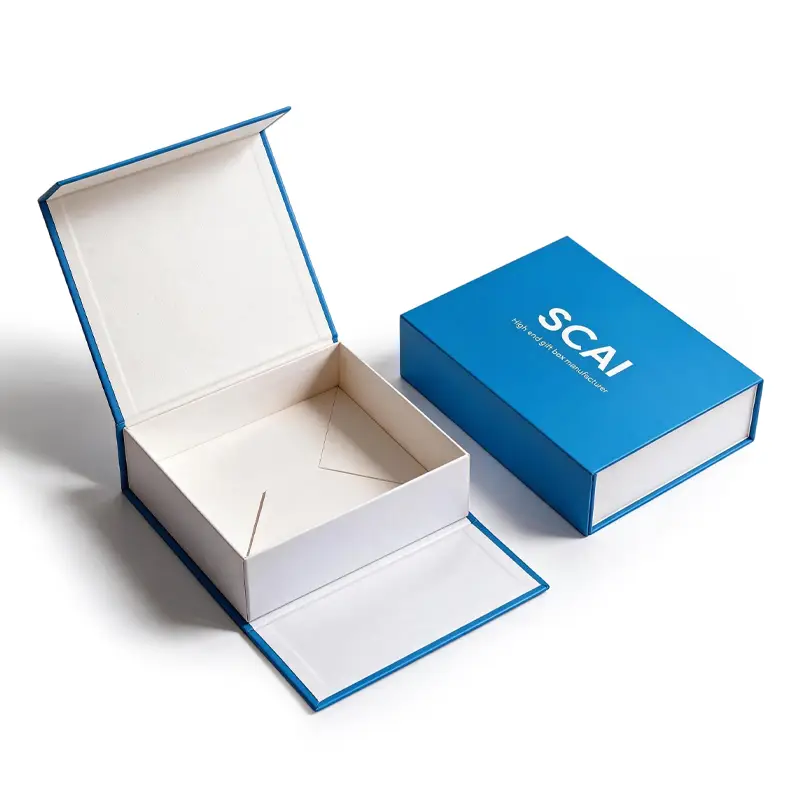
3. Rigid Box
Made from grey board wrapped with surface paper, non-foldable, high hardness, and a heavy feel. Commonly used for high-end gifts, jewelry, electronics, and spirits.
- Structures: Lid-and-base, drawer box, flip-top box, magnetic closure box, etc.
- Surface paper options: Specialty paper, leather, fabric, metallic foil, etc.
- Cost: Higher, because it cannot be folded, and transport and warehousing costs are also high.
- Disadvantage: Expensive, long lead time, suitable for high-priced products.
4. Specialty Process Boxes
- PET/PVC clear boxes: Strong display appeal, suitable for toys, stationery, and small accessories.
- Kraft paper boxes: Strong eco-friendly feel, suitable for food, agricultural products, and handicrafts.
- Biodegradable material boxes: Such as bagasse and bamboo fiber, suitable for brands emphasizing sustainability.
II. Design: Make the Box “Speak”
Craftsmanship determines the “skeleton” of the box, while design determines its “soul.” A good packaging design should simultaneously fulfill three functions: protect the product, communicate the brand, and guide the unboxing experience.
1. Structural Design: First Figure Out “How It Goes In”
- Product dimensions: The inner dimensions of the box must be slightly larger than the product to leave cushioning space (usually 3-5mm on each side). For fragile items, an insert (EVA, foam, paper tray) is needed.
- Opening method: Lid-and-base, drawer style, flip-top, magnetic closure—different opening methods correspond to different levels of unboxing ritual.
- Transport method: If shipping directly for e-commerce, the box must withstand the impact of courier sorting; if for store display, the box must stand on the shelf.
2. Visual Design: Communicate Brand Information Within 3 Seconds
- Key visual: Brand logo, product name, and core selling points must be seen within 3 seconds.
- Color: Consistent with brand tone. High-end brands often use black, gold, and white; eco-friendly brands use earth tones; children’s brands use high-saturation colors.
- Typography: Clear and readable, avoid too many decorative fonts. Product name and brand name should stand out.
- Information hierarchy: Front for brand and product name, side for specifications and barcode, back for ingredients, usage, and precautions.
3. Unboxing Experience: Make Consumers Want to Take Photos and Share
- Insert design: The product is firmly fixed and easy to take out.
- Accessory placement: Manual, warranty card, and gifts arranged neatly.
- Surprise elements: A handwritten thank-you card, a brand sticker, or a textured wrapping paper can all increase the desire to share.
- Eco-friendly considerations: Reduce unnecessary plastic and use recyclable materials, aligning with the values of more and more consumers.
III. Delivery: Don’t Let Lead Time Ruin Everything
The delivery of packaging boxes involves four stages: sampling, production, quality inspection, and logistics. A problem in any stage can prevent the product from being launched on time.
1. Sampling: Confirm Every Detail
- White sample (structural sample): Confirm dimensions, structure, and opening method. Usually free or with a small fee.
- Color sample (printed sample): Confirm color, material, and surface process. Note: There will be color differences between screen colors and printed colors; it is best to see the physical sample.
- Confirmation period: Usually 3-7 days. If special processes (hot stamping, embossing) are involved, it may take longer.
2. Production: Allow Enough Time
- Standard folding cartons: 7-15 days after order placement.
- Rigid boxes: 15-25 days, because wrapping and drying take time.
- Corrugated boxes: 7-12 days.
- Peak season (before Double 11, Black Friday, etc.): Factory schedules are tight, and lead times may extend by 30%-50%. Be sure to place orders at least 45 days in advance.
3. Quality Inspection: Don’t Wait Until the Goods Arrive to Find Problems
- Color deviation: Compare with the confirmed sample; color difference should be within an acceptable range (usually ΔE<3).
- Dimensional error: An inner dimension error exceeding 1mm may cause the product to not fit or to shake.
- Surface defects: Scratches, bubbles, dirt spots, poor hot stamping adhesion.
- Structural strength: Compression test for corrugated boxes, opening and closing test for rigid boxes.
- Recommendation: For large orders, arrange a mid-production inspection (during production) and a final inspection (before shipment).
4. Logistics: Calculate the “Landed Cost”
- Packaging method: Folding cartons are shipped flat; rigid boxes are usually shipped assembled (large volume, high freight).
- Transport method: Sea freight (slow but cheap), air freight (fast but expensive), express (suitable for small batches).
- Tariffs: Tariffs on paper packaging boxes are usually low, but destination country policies still need to be confirmed.
- Warehousing: Rigid boxes cannot be folded and require more warehousing space; plan ahead.
IV. A Checklist: Ask Yourself These 10 Questions Before Choosing a Packaging Box
- What is the product? Weight, dimensions, fragility?
- Is the box for transport, retail, or both?
- What unboxing experience is needed? High-end ritual or simple practicality?
- What is the budget range? What is the target cost per box?
- What surface processes are needed? Lamination, hot stamping, UV, embossing?
- Is an insert needed? What material?
- What is the estimated order quantity? What are the lead time requirements?
- Is sampling needed? Sampling lead time and cost?
- What is the transport method? Estimated freight and tariffs?
- Are there any environmental or certification requirements? (FSC, recyclable, biodegradable)
V. Summary
Choosing a packaging box is essentially about finding a balance between protection, aesthetics, cost, and lead time. There is no “best” box, only the “most suitable” box.
- Craftsmanship determines the lower limit of the box (whether it can protect the product).
- Design determines the upper limit of the box (whether it can make consumers remember the brand).
- Delivery determines whether the box can arrive at the right place, at the right time, and at the right cost.
First clarify the product positioning and budget, then work backward to craftsmanship and design, and finally allow enough time for production and logistics. In this way, the packaging box will become an asset of the brand, not a burden.