
 English
 简体中文
 Español
 Français
 Deutsch
 Русский
 Português
 Italiano
 日本语
 한국어
 العربية
 Türkçe
 Tiếng Việt
 ไทย
 Indonesia
 Melayu

When sourcing packaging factories in Guangzhou, supply chain strength isn’t measured by facility size or the length of an equipment list. It’s measured by whether every link in the chain — from order intake to shipment — can hold up, run smoothly, and catch problems when they arise. A factory with genuine supply chain advantages runs an interlocking process where any weak node collapses both lead time and quality. Here’s the chain, broken down in actual production order.
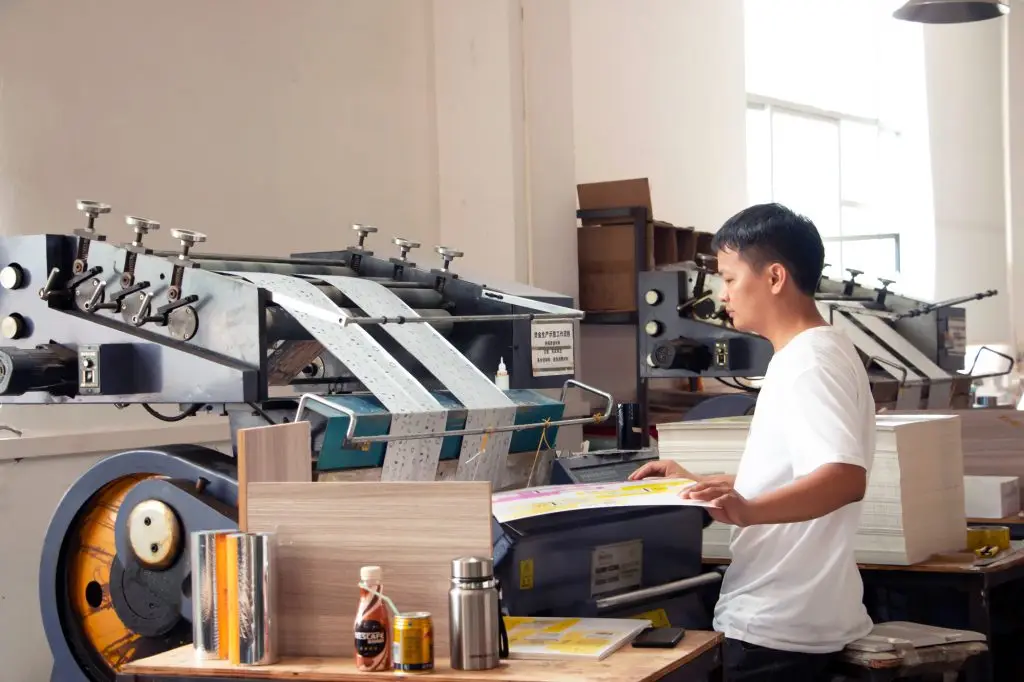
1. Requirement Alignment & Structural Design: Stop Problems Before Printing
After the client specifies dimensions, materials, load-bearing requirements, printing needs, and transport scenarios, the engineering team conducts a structural assessment — not just a quick quote. They confirm whether board composition and grammage can support the product weight, whether the box style will deform under stacking and transit, whether print areas conflict with slotting positions, and whether finishing processes (lamination, foil stamping, embossing) will affect die-cutting precision.
This is where strong Guangzhou factories prove their worth. Engineers with extensive experience on similar products anticipate risks before sampling — whether a product needs five-layer corrugated or reinforced three-layer, whether a box style tends to jam on automatic gluing lines. Get this step right and rework disappears; skip it and problems multiply downstream.
2. Sampling & Approval: Fast, and Accurate
Once the structure is finalized, sampling begins. Digital proofing delivers quick samples for the client to confirm color, material feel, print precision, and forming quality. Two metrics matter: sampling turnaround and first-pass approval rate.
Leading Guangzhou factories typically compress sampling to 3–5 days — not by rushing overtime, but by coordinating digital equipment with conventional production lines. More importantly, sampling isn’t just “making a sample.” It’s a trial run of production parameters: paper ink absorption, color reproduction, die-cut line feasibility — all verified at this stage. Factories with high first-pass rates have fewer problems in mass production.
3. Raw Material Sourcing & Preparation: The Foundation of the Supply Chain
Corrugated board, fluting, facing paper, ink, adhesive — all prepared per the order plan. This step tests supply chain management most severely.
Supply chain strength shows at three levels: stable inventory of common grammages and paper types, eliminating last-minute sourcing; stable relationships with upstream paper mills, enabling price locking and supply assurance when paper prices fluctuate; linked material planning and production scheduling, so materials don’t arrive while lines sit idle, and lines don’t wait for materials. Guangzhou’s concentrated packaging industry means plenty of board suppliers — but the factories that truly keep common materials in stock, slot in urgent orders, and absorb price swings are the ones with real supply chain strength.
4. Printing: Color Management and Registration Accuracy Are the Crucial Points
Offset or flexo is selected based on order volume and quality requirements. Offset suits color-critical folding cartons and premium boxes; flexo suits high-volume corrugated boxes and simple graphics.
The core here isn’t “having a printing press” — it’s color management and registration accuracy. Leading Guangzhou factories commonly use inline inspection systems that monitor color deviation and registration errors in real time, triggering automatic alerts or stops when tolerances are exceeded. Problems are caught during printing, not after finished goods roll off the line. For brand clients, color consistency is everything — the stability of this link determines whether packaging reaches the shelf.
5. Surface Finishing: Where Quality Ceilings and Floors Are Set
Lamination (gloss/matte), varnishing, foil stamping, embossing, spot UV — executed per design requirements. This step separates ordinary factories from high-end ones.
The same print job, finished with different lamination and foil stamping quality, produces vastly different tactile results. Whether matte film is uniform, whether foil edges are clean, whether embossing depth is consistent — clients feel these details in hand. Strong Guangzhou factories have complete in-house finishing equipment: lamination, foil stamping, embossing, and die-cutting all completed on-site. Outsourcing means extra transport, extra quality control risk, and extra days of lead time.
6. Die-Cutting & Gluing: The Decisive Battle for Forming Precision and Delivery Efficiency
Die-cutting determines forming precision; gluing determines delivery efficiency.
Die-cutting hinges on tooling accuracy and pressure control — misalignment, score cracking, and incomplete cuts are common issues. Gluing hinges on automation — automated gluing lines linked with die-cutting are key to controlling labor costs and lead times at Guangzhou supply chain factories. Manual gluing is slow and inconsistent, unable to handle large-volume orders. Factories with scale arrange die-cutting and gluing as linked lines, reducing intermediate handling and waiting time.
7. Inspection & Shipping: The Final Gate
Finished goods are sampled per AQL standards, focusing on print color deviation, die-cut misalignment, gluing integrity, and finishing defects. After passing inspection, products are packed, labeled, and container-loaded per client requirements.
Inspection isn’t a formality. Strong Guangzhou factories have clear judgment criteria and records at this stage, enabling traceability to which batch of paper, which machine, and which shift. That traceability is what gives clients the confidence to place large orders.
Final Note
“Strongest supply chain” isn’t about how expensive a single machine is or how big the facility is — it’s about no weak links across design, sampling, material prep, printing, finishing, and inspection, plus fast response and backup capability when issues arise. The real competitiveness of Guangzhou packaging factories lies in complete industrial supporting infrastructure, short distances between upstream and downstream, fast turnover of common materials, and running this chain steadily and swiftly.
When choosing a packaging factory, look beyond the equipment photos in the brochure. Ask whether this chain still runs under urgent orders, change orders, and high-volume orders. That’s the real test of supply chain strength.