
 English
 简体中文
 Español
 Français
 Deutsch
 Русский
 Português
 Italiano
 日本语
 한국어
 العربية
 Türkçe
 Tiếng Việt
 ไทย
 Indonesia
 Melayu

A rigid box is not simply a thicker folding carton. It is a built object: greyboard is cut and formed, then wrapped in a separate printed or specialty paper, and finally assembled with magnets, ribbons, trays, or inserts. That construction is why it holds its shape permanently and why it carries a perceived value that a folding carton cannot match. For brands in beauty, electronics, spirits, jewelry, or gifting, the rigid box is often the first packaging format that signals “this product is not ordinary.”
Types: The Structure Comes First
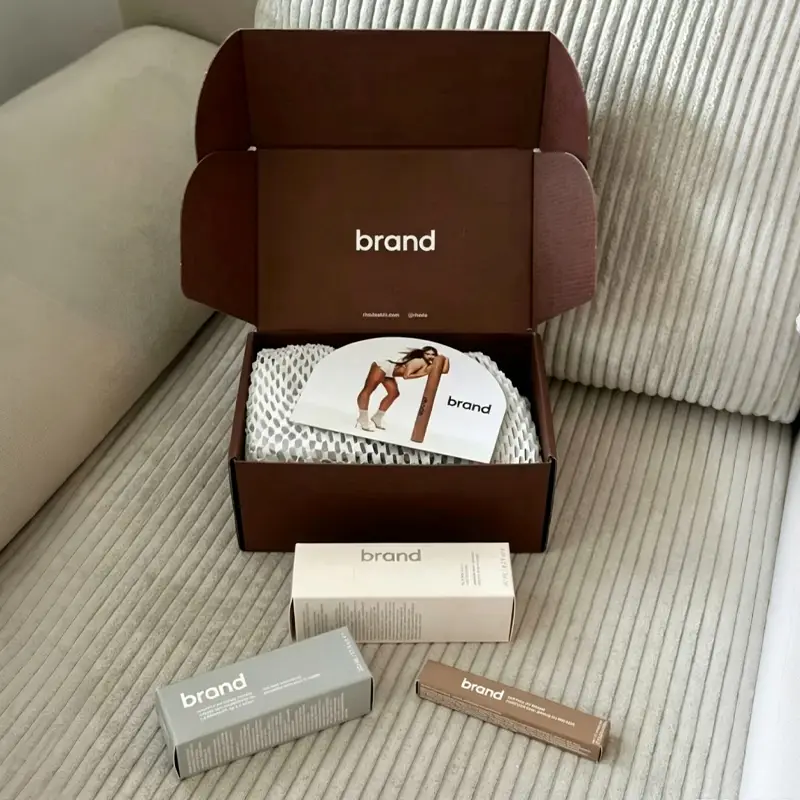
Most rigid box briefs begin with a look rather than a structure. Naming the structure first shortens the entire quoting and sampling cycle. The most common formats include:
Two-Piece Lid and Base. The default format. The lid lifts clear of the base, either full-cover or partial. It is the workhorse for apparel, gifting, and any product presented flat.
Magnetic Closure. A front flap held by concealed magnets. This is the standard for beauty, fragrance, and subscription boxes where the opening itself is part of the experience.
Shoulder Box. An inner collar sits between the base and the lid, creating a controlled, snug close. Premium spirits and fragrance brands use this to signal precision.
Drawer / Slide. An inner tray slides out of an outer sleeve. It suits jewelry, watches, and multi-item sets, keeping contents secure in transit.
Book-Style. Hinged along one edge, opening like a hardback. It is used for press kits, high-value samples, and collector editions.
Collapsible. Ships flat and assembles on-site with magnets. This is the answer when freight volume or warehouse space is the binding constraint.
Round and Cylinder. For candles, spirits, and anything where a corner would look wrong.
Beyond these, window cut-outs and fully custom die-cut shapes can be applied across most structures, though custom tooling adds cost and lead time.
Materials: The Board and the Wrap
Every rigid box begins with greyboard, a recycled, durable material that forms the solid structure. Board thickness typically ranges from 1.5 mm to 3.0 mm, and the choice is structural, not decorative. A 1.5–1.8 mm board suits small jewelry or cosmetics boxes; 2.0–2.5 mm is the default for standard gift boxes; 3.0 mm is reserved for large boxes or heavy contents where the load demands it. Moving from 2.5 mm down to 2.0 mm on a standard box is usually a visible cost reduction with no functional loss.
The wrap is a second material with its own print, tolerance, and failure modes. Options range from uncoated and coated papers to recycled papers, specialty textured papers, and fabric-like coverings. Because printing happens on the wrap rather than the structural board, the two can be costed and optimized separately.
Inside, fitments protect and present the product: greyboard inserts, corrugated or carton inserts, foam (EVA), vacuum-formed trays, molded pulp, and even mushroom-grown or post-consumer waste inserts for brands prioritizing sustainability. Closures complete the object: magnets, ribbon ties, paper ties, or tab locks.

Costs: Where the Money Actually Goes
A common misconception is that rigid boxes cost more because the paper is more expensive. The real reason is hand assembly. A folding carton runs through a die-cutter and folder-gluer in seconds. A rigid box is wrapped, corner-folded, fitted, and assembled by operators, and that labor is usually the single largest cost line.
Public 2026 price guides place many rigid boxes around $3 to $15+ per unit, with higher unit prices at low volume and complex finishes. A line-by-line breakdown for a mid-sized magnetic closure box with a foam insert looks roughly like this:
| Cost Line | Typical Share | What Drives It |
|---|---|---|
| Greyboard and wrap paper | 30–45% | Board thickness, wrap grade, sheet size |
| Printing the wrap | 8–15% | Number of colors, plate count, press setup |
| Finishing | 10–20% | Lamination, foil, spot UV, soft-touch |
| Interior insert | 5–15% | Paperboard vs. EVA vs. velvet; die-cut complexity |
| Hand assembly and QC | 20–35% | Number of pieces, wrap registration, magnet fitting |
| Tooling | 5–12% | Cutting die, foil die, insert die (usually one-off) |
Source: indicative shares for a Dongguan-produced magnetic box.
Minimum order quantities sit higher than for folding cartons, typically starting around 500 units for a custom structure. Sampling is not optional: a rigid box that is 1 mm out of tolerance on the wrap will not close properly, so a physical sample must be approved before production.
Uses: Where Rigid Boxes Earn Their Cost
Rigid boxes are used wherever the unboxing is part of the product. Luxury retail—apparel, fragrance, jewelry, designer accessories—uses them to extend brand elegance from the shelf to the home. Beauty and skincare brands rely on them for multi-item sets that need structure, protective inserts, and a branded sleeve or wrap. Spirits and fragrance use shoulder-neck constructions where a controlled close signals quality. Consumer electronics use rigid boxes because they are sturdy enough to protect costly devices while still presenting a refined first impression. Corporate gifting and subscription kits use them to turn a shipment into a kept object rather than disposable packaging.
The through-line is simple: a rigid box is chosen when the packaging itself is expected to carry meaning, not just contain a product. It is built to be kept, and that is precisely why it costs more to make.