
 English
 简体中文
简体中文 Español
 Français
 Deutsch
 Русский
 Português
 Italiano
 日本语
日本语 한국어
한국어 العربية
 Türkçe
 Tiếng Việt
 ไทย
ไทย Indonesia
 Melayu
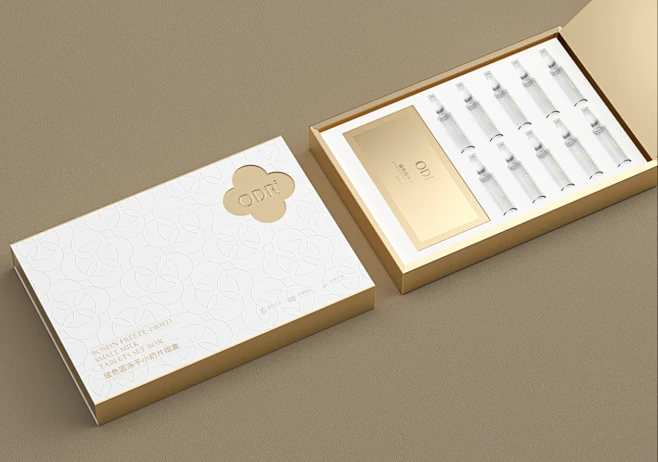
When finished high-gloss black piano-finish cosmetic boxes enter warehousing, stacking and multi-stage distribution, fine hairline friction marks inevitably appear on the mirror-like coated surface, which has long been a major challenge for beauty packaging manufacturers. These boxes adopt PU/PE composite high-gloss coating with dense molecular structure and low surface friction coefficient. Once stacked up to 15 layers or more, continuous micro-friction between boxes will leave visible scratch patterns on the flawless surface. Even with elaborate design and structural optimization in early stages, surface damage will greatly degrade product grade. Two mature industrial solutions are widely applied in the industry: anti-scratch lamination and velvet-flocked tracing paper. They follow different technical principles and show distinct differences in performance parameters.
In-depth Technical Introduction of Two Core Protection Solutions
1. Anti-Scratch Lamination
This is a pre-production protection process integrated into the production line. After painting and printing on high-gloss rigid cosmetic packaging boxes, functional film is directly bonded to box surfaces on automated lines. The mainstream material is high-density cross-linked polymer BOPP/PET film with a thickness of 18μm to 22μm. Calibrated by Sutherland Abrasion Tester and ASTM D3363 pencil hardness standard, the film maintains stable surface hardness at 2H to 3H, resisting more than 98% of micro-scratches during regular transit.
The dyne level of this anti-scratch film stays steadily at 38-40 mN/m, which guarantees molecular-level adhesion for post-processes including hot stamping and spot UV coating, effectively preventing foil peeling during mass production. The whole lamination process is fully automated with a standard line speed of 45m/min and requires no manual operation, perfectly suitable for bulk orders of over ten thousand units. Practical tests prove that the film tends to lose adhesion slightly on sharp corners and curved surfaces with fillet radius less than 1mm, bringing a minor edge lifting risk under long-term heavy stacking.
2. Velvet-Flocked Tracing Paper Physical Isolation
This is a post-packaging buffering solution that separates rigid materials from coated surfaces via physical barrier. Custom tracing paper with grammage ranging from 120gsm to 160gsm and flock density no less than 80 fibers per square inch is applied according to the dimension of high-gloss black piano-finish cosmetic boxes. The base material is high-purity low-residual-sulfate tracing paper. Specially processed during pulping, it features natural oil resistance and high airtightness, which blocks moisture penetration and avoids micro chemical erosion to the PU/PE coating on box surfaces.
In warehousing with stacks over 15 layers, this solution controls the occurrence rate of hairline friction marks on piano-finish surfaces below 0.02%. The soft flocking layer also improves unboxing experience. However, this process cannot be automated. For mass production, 1 to 2 additional dedicated operators are required to place the paper manually, which extends overall working hours. Its prominent advantage is full flexibility to fit any box shape without limitations from 3D geometric structures.
Multi-Dimensional Performance Comparison Table
| Metrics | Solution A: Anti-Scratch Lamination | Solution B: Velvet-Flocked Tracing Paper |
|---|---|---|
| Test Standard / Hardness Grade | ASTM D3363 / 2H – 3H pencil hardness | No hardness index / Physical buffering via fiber damping |
| Scratch Resistance Rate (Logistics Test) | 98.5% (Resist transit friction & micro abrasion) | 100% (Completely block direct contact between paperboard & rigid box walls) |
| Dyne Level / Post-process Compatibility | 38-40 mN/m / 100% compatible with hot stamping & spot UV | Not applicable / Auxiliary material for finished packaging |
| Production Efficiency / Labor Dependency | High (45m/min automatic line, 0 on-site operators) | Medium & Low (1-2 extra operators required for placement in mass production) |
| Irregular Box Adaptability (3D Geometry) | Average (Edge lifting likely on sharp corners & R<1mm curves) | Excellent (Fully conform to any box geometry) |
| Unit Comprehensive Cost | Fixed (Stable material cost, ideal for bulk orders) | Variable (Determined by paper grammage & labor hours, ideal for limited editions) |
Application Selection Guide by Scenario
Based on packaging structure, order quantity, stacking height and circulation cycle, we have sorted out practical selection suggestions:
- Regular single cosmetic boxes & bulk orders over 10,000 units: Adopt standard anti-scratch lamination to balance productivity and protection for full-channel distribution.
- Mid-range two-piece gift boxes & limited-edition products: Choose 120gsm standard-density velvet-flocked tracing paper to balance protection performance and unboxing experience with controllable cost.
- High-end luxury gift boxes & long-term warehousing with stacks over 15 layers: Apply dual protection, combining 3H-grade anti-scratch lamination as base layer and 140gsm thick flocked paper as secondary barrier.
- Thin irregular high-gloss rigid cosmetic packaging boxes with R<1mm: Prioritize velvet-flocked tracing paper to avoid film peeling on bent surfaces.
No single process can cope with all complex working conditions, which is a practical conclusion drawn by Shengcai after serving thousands of beauty packaging projects. Lamination alone sees a slight rise of corner abrasion rate in high-stack warehouses; flocked paper may shift during long-distance transportation. For orders requiring long-term warehousing and multi-point transit, we recommend the combined solution of 3H 18μm PET anti-scratch film plus 140gsm high-density flocked paper. For short-circulation limited products focusing on visual effect and unboxing experience, we simplify lamination specifications and give priority to the additional value of flocked paper.
FAQ & Troubleshooting
Q1: Will 3H-grade anti-scratch lamination affect the environmental performance of paper boxes or cause customs clearance issues?
A1: All BOPP/PET anti-scratch films adopted by Shengcai comply with REACH and RoHS standards. When packaging is discarded, standard repulping process can separate film from paperboard 100% mechanically without damaging paper recyclability, so there will be no environmental-related clearance risks.
Q2: Will 160gsm high-density velvet-flocked tracing paper fade or stain the coating when in long-term contact with high-gloss black piano-finish cosmetic boxes?
A2: Our flocked paper undergoes dual treatment of 120℃ high-temperature color fixation and anti-stick coating, matched with low-residual-sulfate base material. It will not fade or bleed under conventional temperature and humidity. We conduct 72-hour adhesion simulation tests for all incoming raw materials to eliminate potential contamination risks in advance.
Q3: Why do hot stamping defects like fuzzy edges and incomplete printing often occur on high-gloss black piano-finish cosmetic boxes after lamination?
A3: This problem is mainly caused by two unqualified parameters: first, the dyne level of anti-scratch film is lower than 36 mN/m with insufficient surface activity; second, the hot stamping machine is not operated within the optimal temperature range of 110℃-130℃, or pressure parameters are mismatched. We conduct random inspection with dyne pens for every batch of laminated products to ensure full compatibility with fine-pattern hot stamping.
Q4: What is the performance gap between 2H and 3H anti-scratch lamination under heavy stacking over 15 layers?
A4: Under stacks of 15 to 20 layers, the scratch resistance rate of 3H film is 4.2% higher than 2H film. The gap expands to 7.8% when stacking height exceeds 20 layers. 3H-grade film is highly recommended for products with long-term warehousing and long-distance transportation.
Q5: Will protection performance drop obviously if the flock density of velvet-flocked tracing paper is lower than 80 fibers per square inch?
A5: Yes, the performance declines significantly. Lower flock density leads to larger fiber gaps and weaker airtightness of the buffering layer. Under 15-layer stacking, the occurrence rate of hairline friction marks will rise from 0.02% to 1.15%, failing to meet the protection requirements for high-end packaging.
The overall value of beauty packaging comes from the perfect combination of exquisite design and intact surface condition. With rich experience in packaging manufacturing, Shengcai specializes in customization and technical optimization for high-gloss black piano-finish cosmetic boxes and premium beauty gift boxes. We have built a complete system for material testing and process adjustment. From sample making and abrasion tests to mass production, we strictly control all technical parameters and match targeted anti-abrasion solutions according to box structure, circulation scenarios and production scale. Every piece of high-gloss rigid cosmetic packaging box can be delivered to destinations with its original perfect appearance.