
 English
 简体中文
 Español
 Français
 Deutsch
 Русский
 Português
 Italiano
 日本语
 한국어
 العربية
 Türkçe
 Tiếng Việt
 ไทย
 Indonesia
 Melayu

The choice between kraft and coated paper bags is not a question of which material is superior. It is a question of which material is suited to a specific job. Both begin as paper, but the surface treatment changes everything: how the bag feels in a customer’s hand, how your artwork reproduces, how it survives moisture, and—increasingly relevant in 2026—how cleanly it recycles.
The Fundamental Difference: Surface, Not Structure
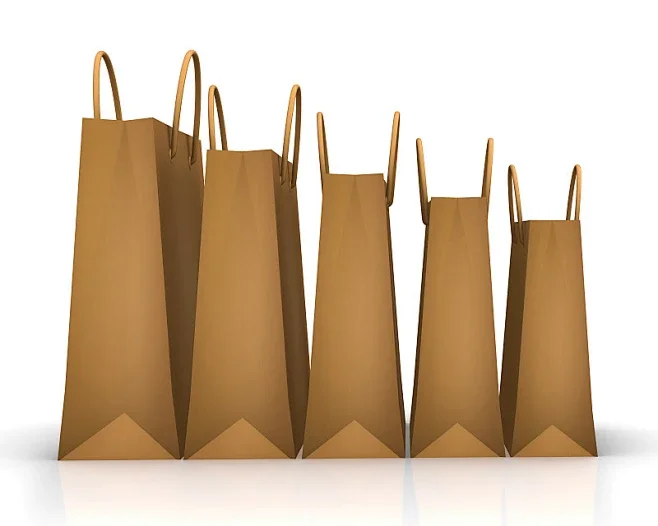
Kraft paper is made through the sulfate pulping process, which preserves long wood fibers. That fiber structure is why kraft bags resist tearing and puncturing so well, and why they carry a distinctly rugged, tactile character . The surface is uncoated, usually left in its natural brown state (though bleached white kraft exists), giving it an honest, organic appearance that many eco-positioned brands deliberately choose.
Coated paper bags start with a paper base—often art paper—and add a surface layer. That layer might be a water-based coating or a plastic film lamination. The purpose is to fill the paper’s fibers and create a smooth, bright canvas that accepts ink with sharpness and holds fine detail . The result is the polished, retail-ready look associated with cosmetics, gifting, and premium fashion.
Cost: Where the Money Actually Goes
At volume, kraft is generally the lower-cost option. The manufacturing process involves fewer steps, and the uncoated surface means no extra coating or lamination stage . A 2026 pricing guide indicates that virgin kraft in the 70–120 g/m² range sits at a medium relative cost, while coated art paper in the 128–250 g/m² range is classified as high cost . That higher GSM is part of the story—coated bags often need more paper weight to achieve comparable strength—but the coating process itself adds expense.
The cost gap widens or narrows depending on finishing choices. A basic kraft bag with one-color printing is the most economical configuration available. A coated bag with matte lamination, spot UV, and foil stamping can cost several times more per unit. The practical question is not “which is cheaper” but “does the finish justify the premium for this specific product and customer.”
Quality and Performance: A Trade-Off, Not a Hierarchy
Strength and durability. Kraft’s long fibers give it excellent tensile strength and tear resistance . A well-constructed kraft bag can handle loads that would strain a coated bag of similar weight. Coated bags are strong for their weight, but the coating can micro-crack along hard folds, which is why heavier builds often require reinforced bases and corners .
Print quality. This is where coated paper wins decisively. The smooth, clay-coated surface stops ink from soaking into the fibers, allowing for sharp photographic reproduction, gradients, and fine typography . Kraft’s uncoated surface absorbs ink, muting colors and limiting detail. Simple logos and bold single-color designs work well on kraft; complex artwork does not .
Moisture and grease resistance. Coated bags offer a barrier against humidity and light spills. Kraft, unless treated, has limited resistance . For products that might encounter condensation or grease—food items, cosmetics with oil-based formulas—this difference matters.
The Sustainability Question: Read the Coating, Not the Label

Kraft has the simpler recycling story. Uncoated, unbleached kraft goes directly into standard paper recycling streams and biodegrades without microplastic concerns .
Coated bags are not automatically less sustainable—it depends entirely on the coating type. Water-based or aqueous coatings are generally repulpable and recycle through standard paper streams. Plastic film lamination (PE or BOPP) fuses plastic to paper, complicating or preventing recycling unless the facility can separate the layers . The practical rule: if you want a coated finish and a defensible sustainability claim, specify a recyclable water-based coating, not a plastic laminate. A factory that cannot tell you exactly which coating it uses is a factory to approach with caution.
Uses: Matching the Bag to the Job
Choose kraft when the material’s natural appearance is part of the brand message—eco-first, artisanal, organic, or grocery retail. It is also the pragmatic choice for high-volume, cost-sensitive orders where simple branding suffices, or for dry goods that do not require a moisture barrier .
Choose coated when print quality and perceived value carry the brand experience—premium retail, fashion, beauty, gifting, or any product where the bag functions as part of the presentation. It is the safer choice for detailed artwork, photographic reproduction, or products exposed to light moisture .
A dual strategy is common and sensible: kraft for everyday high-volume lines, coated for flagship products, gift sets, or seasonal launches. The two can coexist under the same brand without contradiction.
A Final Note on Specification
Neither material is inherently “better.” The specification that matters is the one matched to the product, the customer, and the end-of-life pathway you can honestly claim. Before committing to a production run, request a filled sample in the actual material and finish you intend to use. A bag that looks right on a screen but fails at the handle or cracks at the fold is a cost, not an investment.