 English
 简体中文
简体中文 Español
 Français
 Deutsch
 Русский
 Português
 Italiano
 日本语
日本语 한국어
한국어 العربية
 Türkçe
 Tiếng Việt
 ไทย
ไทย Indonesia
 Melayu
You probably handle paper boxes every day. Shipping cartons, cosmetic boxes, gift boxes, food packaging — they quietly appear on shelves, at your doorstep, in your hands. But few people stop to think: how is a paper box actually made?
Today, let’s talk about the “invisible craftsmanship” behind every paper box.
1. The Skeleton: Material Determines Destiny
A paper box starts with a sheet of paperboard. The two most common types are:
- Cardstock: Thin but rigid, ideal for small packaging like cosmetics, pharmaceuticals, and electronics.
- Corrugated: With a wavy fluted layer in the middle, it offers strong compression resistance and is the workhorse for shipping and transport packaging.
The material you choose depends on whether your product needs to be “protected” or “displayed.” For high-end gifts, grey board wrapped in paper is often used — it feels substantial and premium when opened.
2. The Skin: Printing Determines Appearance
For a sheet of board to become a brand’s front door, printing is the soul. Common techniques include:
- Offset Printing: High color fidelity, suitable for large-volume orders with complex graphics.
- UV Printing: Creates a high-gloss effect on specific areas, with a raised texture — often used for logos or key text.
- Foil Stamping: Metallic foil is pressed onto the paper surface, creating a mirror-like reflection. A standard for luxury packaging.
- Embossing/Debossing: No ink involved — a die presses a three-dimensional texture into the paper. Understated but premium.
3. The Joints: Structure Determines Experience
Whether a paper box works well depends on its structural design. Common box styles include:
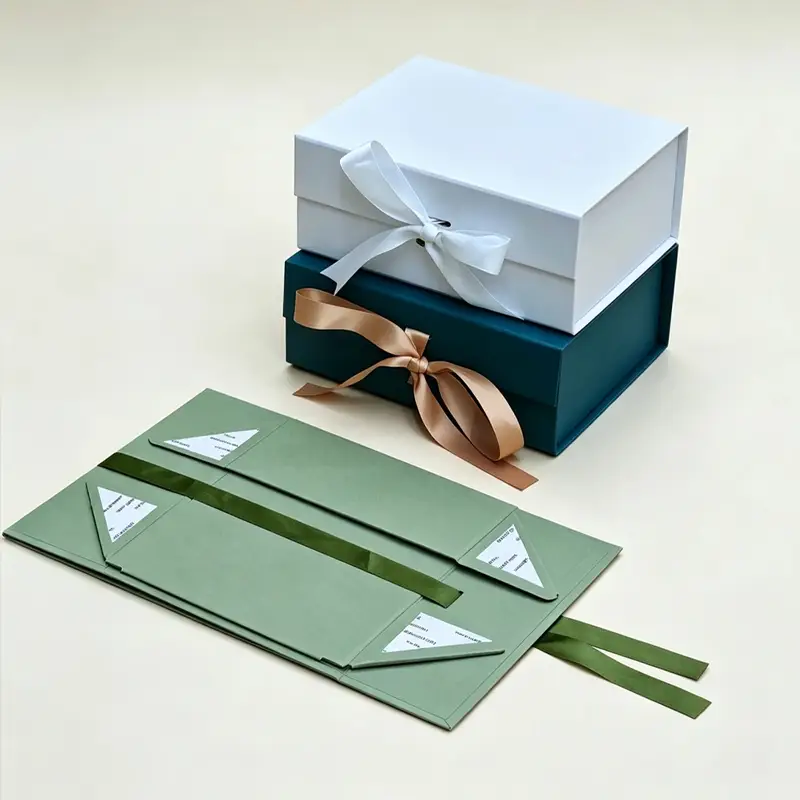
- Lid and Base: Two separate pieces, offering a strong unboxing ritual — ideal for gift boxes.
- Folding Carton: Die-cut from a single sheet, folded into shape. Low cost, easy to ship — the mainstream choice for daily chemical and food packaging.
- Drawer Box: Slides open like a drawer, creating an interactive experience. Often used for premium stationery or accessories.
A good structure holds itself together without glue. A poor one falls apart as soon as you fill it.
4. The Conscience: Sustainability Determines the Future
More and more brands are paying attention to the environmental attributes of paper boxes:
- FSC-certified board: Sourced from sustainably managed forests.
- Soy-based ink: More biodegradable than traditional inks, reducing chemical residue.
- Recyclable design: Minimizing composite materials so the box can be easily recycled.
The fate of a paper box is not just about brand image — it’s also about where it ends up after being discarded.
Final Thoughts
A paper box, from board to finished product, goes through material selection, printing, die-cutting, folding, gluing, and many other processes. It is not just a container — it is the first physical touchpoint between a brand and its user.
A good paper box makes people feel the sincerity before they even open it.