
 English
 简体中文
简体中文 Español
 Français
 Deutsch
 Русский
 Português
 Italiano
 日本语
日本语 한국어
한국어 العربية
 Türkçe
 Tiếng Việt
 ไทย
ไทย Indonesia
 Melayu
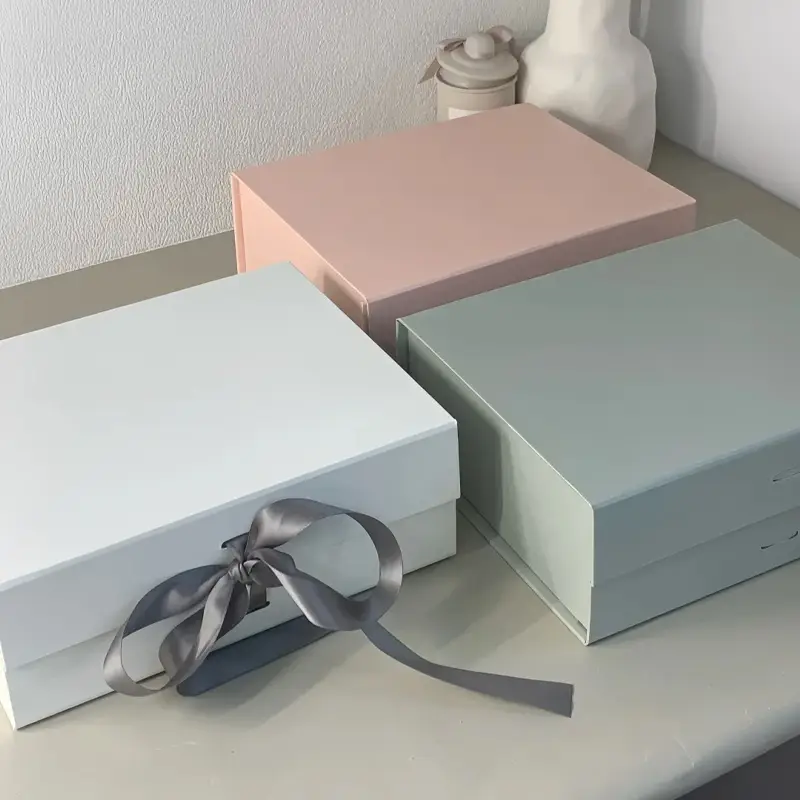
Unboxing a batch of custom magnetic gift boxes should feel like an immediate win for your brand. But after cross-country logistics and tight warehouse stacking, opening shipments to find crooked lids, warped side walls, or distorted parallelogram shapes is a brand manager’s worst nightmare.
As a manufacturing partner deeply rooted in custom packaging, Shengcai gets these transit damage reports all too often. On the surface, a misaligned lid looks like a minor flaw. Underneath, however, it points to a complex mix of paperboard physics, magnetic tolerance, and structural mechanics. Tossing a thicker outer corrugated carton at the problem simply won’t cut it.
1. The Upgrade Breakdown: Traditional vs. Engineered Transit Performance
Many brands instantly blame “rough courier handling” for box deformation. Yet, when you look at production data, batches built with optimized structural engineering achieve near 100% unboxing perfection. Here is how Shengcai re-engineered the standard spec to survive brutal shipping conditions:
| Optimization Vector | Traditional Method (High Risk of Misalignment) | Shengcai Engineered Standard (Recommended) | Cost Impact |
| Corner Reinforcement | Basic 4-wall glue joint with zero structural corner support | Triangular corner reinforcement + Deepened V-groove scoring | Minimal cost optimization |
| Core Board Material | Single-layer standard greyboard with no moisture barrier | High-density double greyboard + Anti-moisture composite laminate | Boosts structural stiffness |
| Magnetic Alignment System | Single round magnet with zero physical slot constraint | Dual high-adsorption rectangular magnetic strips + CNC-routed alignment slots | Locks lateral shifting |
2. 4 Pre-Production Details That Eliminate Transit Damage
To permanently eliminate post-shipping defects, engineering adjustments must happen before production kicks off:
- 120° V-Groove Optimization Standard packaging often uses a 90° V-cut, which concentrates severe stress at the folds. We adjust the scoring angle to 120°, giving the fold enough buffer elasticity to evenly distribute compression stress without warping the board face or lifting the lid edges.
- Inner Step-Wall Constraints (Collar/Lip Design)Adding a 5mm to 10mm inner collar at the base creates an absolute closure boundary for the lid. Even if exterior pressure causes micro-deformation, the rigid collar forces the lid back into precise alignment, physically preventing lateral sliding.
- CNC Precision Routing All magnetic components are mapped and drilled using CNC-routed template jigs, keeping center-point alignment tolerances within 0.2mm. This removes human error during manual slotting and completely stops magnet-offset misalignments.
- Climate-Controlled Board Conditioning Before entering production, our raw boards undergo a controlled temperature-and-humidity curing process to release internal wood-pulp stress in advance. This prevents post-packing warping caused by seasonal humidity swings.
3. Frequently Asked Questions (FAQ)
Q: If our magnets are extra-strong, why do the box lids still slide out of place during transit?
A: Magnets only provide vertical clamping force—they cannot counteract the lateral shear stress created by heavy stacking. While strong magnets keep the box from popping open, stopping horizontal sliding requires physical constraints like inner collars or interlocking stepped edges.
Q: How can I quickly tell if a damaged box failed due to moisture warping or magnet placement errors?
A: Grab a right-angle square tool and check the four inside corners of the box:
- If the interior angles deviate significantly from 90 degrees, the failure is structural warping caused by environmental moisture/stress release.
- If the corners are perfectly square, but the lid closure seam is uneven or staggered, the issue is magnet drilling tolerance drift.
Q: Can we apply these anti-deformation structural designs to low-MOQ or sample orders?
A: Absolutely. At Shengcai, we don’t water down our engineering standards for smaller runs. Whether you need a small prototype batch or a full mass-production run, high-density anti-moisture boards, CNC magnet tooling, and V-angle optimization are standard across the board.
Fix the engineering upfront, save on aftermarket remedies. If you are currently designing custom magnetic boxes and want to bulletproof your packaging against transit deformation and lid misalignments, reach out to Shengcai for a structural prototyping consultation today.