
 English
 简体中文
简体中文 Español
 Français
 Deutsch
 Русский
 Português
 Italiano
 日本语
日本语 한국어
한국어 العربية
 Türkçe
 Tiếng Việt
 ไทย
ไทย Indonesia
 Melayu
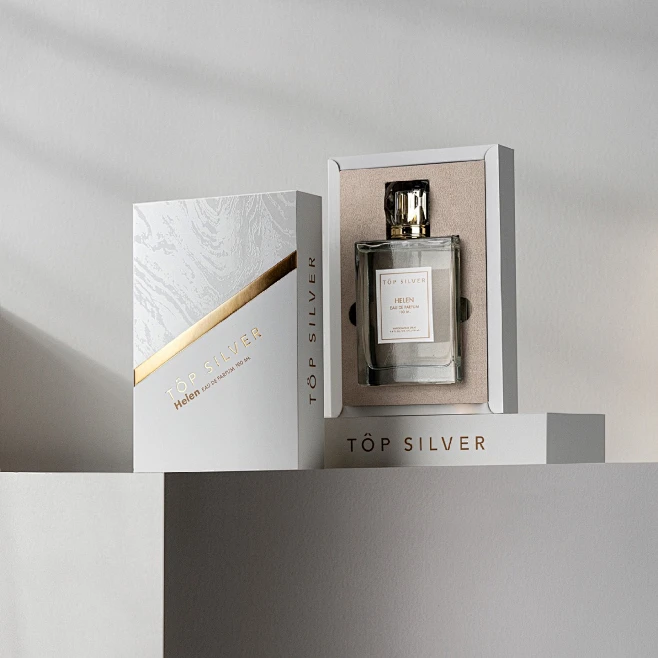
With 25 years of industry experience as a professional luxury perfume box manufacturer, Shengcai handles custom packaging orders for fragrance brands worldwide and witnesses the same costly quality defect repeatedly. After finished batches of custom perfume packaging boxes with dark flocked velvet inserts are stocked alongside white pearlized perfume bottles for 3 to 6 months of sealed storage, blurred permanent stains cover bottle surfaces. This common velvet insert color migration triggers severe perfume bottle staining issues, which do not merely ruin shelf presentation. Worse still, brands may miss the golden launch window for new scents and face substantial costs from product returns and supply chain compensation. Many buyers spend weeks inspecting glass coating technology, only to discover the root problem originates from liner fabric color migration reactions.
Why Do Dark Velvet Liners Cause Discoloration on White Perfume Bottles? Mechanism of Color Migration
In truth, stained bottle surfaces never stem from a single raw material flaw. The discoloration comes from combined physical and chemical reactions between liner dyes, adhesive additives and fluctuating long-term storage temperature and humidity — a hidden risk most buyers overlook during material sourcing.
Budget custom perfume packaging boxes are usually fitted with affordable flocked liners dyed with disperse dyes, which form weak molecular bonds with fabric fibers. Once storage temperatures rise steadily between 45°C and 60°C, dye molecules sublimate and break free from fiber surfaces to spread outward. The pearlescent coating on white perfume bottles features tiny absorbent micropores that trap free dye molecules deep inside the coating, leaving permanent, unremovable marks.
Adhesive glue for liner lamination is another easily overlooked catalyst. Traditional solvent-based rubber adhesives retain high levels of plasticizers and volatile compounds that gradually soften the protective film on perfume bottles, creating unobstructed pathways for dye penetration. Even samples that look flawless during pre-production trials will develop obvious staining after six months of stacked sealed storage.
2026 New Low-Carbon Supply Chain Standards: Performance Comparison of Two Types of Anti-Migration Flocked Liners
After the release of updated low-carbon regulations for luxury packaging in 2026, the industry has raised strict standards for eco-friendliness and weather resistance of liner dyes and adhesives. The Shengcai Lab has completed multiple rounds of high-temperature & humidity aging tests under the latest ISO 105-X12 color fastness standards. The table below clearly outlines the performance gap between standard industrial flocked liners and our premium custom anti-migration velvet:
| Testing Indicator | Standard Industrial Flocked Liner | Shengcai Premium Anti-Migration Flocked Liner |
|---|---|---|
| Core Dye Category | Disperse dye, weak fiber bonding, prone to sublimation and color transfer under high heat | Reactive / vat dye, high-temperature color fixation, stable fiber locking compliant with 2026 eco regulations |
| Lamination Adhesive | Solvent-based rubber glue, abundant volatile residues & plasticizers | Eco water-based acrylic glue / solvent-free PUR hot melt glue, zero harmful volatile emissions |
| Dry & Wet Rub Color Fastness | Grade 2-3, loose color transfer with light rubbing | Grade 4.5 and above, no dye leakage during dry or wet friction tests |
| Extreme Temp & Humidity Migration Test | Visible color bleeding after 7 days sealed storage at 40°C | Zero color migration, zero bottle contamination after 14 days sealed at 60°C & 80% RH |
| Suitable Storage Lifespan | Only for short-term storage of 1-2 months, high risk of bottle staining for long-term warehousing | Stable performance for up to 24 months shelf storage, fully solves staining problems after 6-month warehousing |
Full-Cycle Anti-Color Migration Customization Control Process from Luxury Perfume Box Manufacturer Shengcai
Simply upgrading liner fabric cannot fully eliminate perfume bottle staining issues caused by velvet insert color migration. A closed-loop management system covering raw material procurement, pre-production sampling tests, mass production craftsmanship and finished product protection is essential, and this standardized workflow is included in all our custom perfume packaging boxes service packages:
- Pre-production raw material screening: Every batch of dark velvet and flocked liner undergoes color fastness sampling inspection before warehousing. Fabrics prone to high-temperature bleeding are rejected directly to cut off color migration risks at the source
- Upgraded eco-friendly lamination technology: High-residue solvent glues are fully phased out. Low-VOC solvent-free hot melt glue complying with 2026 low-carbon supply chain rules is used for low-temperature liner lamination to prevent glue additives from softening bottle coatings
- Laboratory accelerated aging simulation tests: Once prototype gift boxes are finished, we replicate extreme storage temperature and humidity conditions for a 14-day sealed aging trial. We accurately predict surface defects that may appear after 6 to 24 months of storage; prototypes failing the test are fully reworked
- Optional isolation protection for finished goods: For orders with pure white and light pearlescent perfume bottles, ultra-thin eco isolation films can be installed to separate direct contact between liners and bottle bodies for double anti-staining protection
Frequently Asked Buying Questions About Color Migration in Perfume Packaging
With years of experience creating premium custom perfume boxes, we have collected the most frequent practical inquiries from purchasing managers, with all solutions backed by verified test data from the Shengcai Lab:
Q1: How to quickly test liner samples to check for staining risks on white pearlized perfume bottles?
There are two low-cost self-testing methods without waiting for third-party lab reports. First, follow ISO 105-X12 standards and rub the liner repeatedly with pure white test cloth to check for color transfer. Second, tightly press the liner against blank coated pearl perfume bottles and place the assembly inside a 50°C constant-temperature oven for 72 hours. After removal, inspect bottles for yellowing or blurred discoloration marks. Combining both tests filters out over 95% of low-quality liners with high color migration risks.
Q2: Dark velvet liners are mandatory in brand design, what steps reduce long-term storage bottle staining?
Three coordinated adjustments deliver reliable improvements. Select high-temperature fixed reactive dyed flocked fabric to eliminate dye sublimation risks; fully replace solvent adhesives with low-emission eco glue for liner mounting; add invisible inner isolation layers for goods requiring over six months of warehousing and logistics circulation. The layers preserve the luxury texture of gift boxes while completely blocking dye penetration channels.
Q3: Bottle discoloration still occurs after switching to premium flocked liners, what causes this issue?
Most buyers focus solely on liner fabric inspection while ignoring the joint impact of all auxiliary box materials. Inner buffer foam, base cardboard and dust-proof lining paper manufactured with low color fastness dyes can also trigger color migration during long-term sealed storage and indirectly stain perfume bottles. Complete quality control for custom perfume packaging boxes requires all supporting auxiliary materials to adopt anti-migration eco fabrics to fully eliminate staining hazards.
As an established luxury perfume box manufacturer with 25 years of experience, Shengcai continuously updates our craftsmanship to align with 2026 global low-carbon and weather-resistance standards for luxury packaging. We have built a complete color migration prevention system for all types of perfume packaging custom orders. Fragrance brands partnering with us avoid costly long-term warehousing losses, delayed deliveries and supply chain compensation thanks to our strict raw material screening, rigorous laboratory aging testing and full-cycle eco-friendly production standards. Brands no longer struggle with perfume bottle staining issues induced by velvet insert color migration, ensuring white pearlized perfume bottles remain spotless and glossy after months of storage and long-term retail display.