
 English
 简体中文
简体中文 Español
 Français
 Deutsch
 Русский
 Português
 Italiano
 日本语
日本语 한국어
한국어 العربية
 Türkçe
 Tiếng Việt
 ไทย
ไทย Indonesia
 Melayu
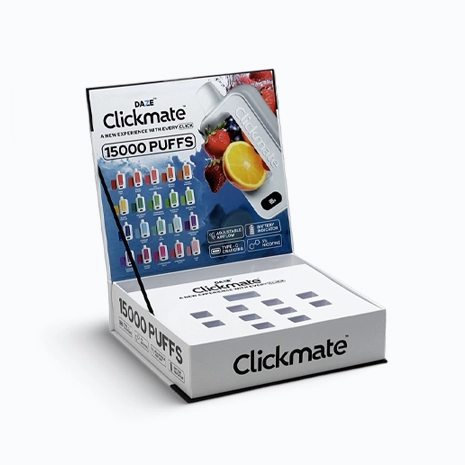
In offline terminal display scenarios, a display box that can catch consumers’ attention is more than just a simple container. The refined design of backplane height and front opening angle directly determines the product’s exposure rate and purchase conversion rate on shelves. Many brands only focus on appearance printing during batch customization, but ignore the adaptation of structural size, mechanical balance and visual landing point, which eventually leads to products being submerged in shelves. This is not only the most easily overlooked core problem of terminal display, but also the most likely pitfall in the bulk custom display box structure scheme for B-end brands in bulk distribution.
In-depth Analysis: Why is the 15-degree downward inclination the “Golden Spot”? Studies have shown that the average scanning speed of consumers in front of shelves is 0.6m/s. Structural engineers at Shengcai found that when the display box backplane height is matched with the 15-degree line of sight inclination, the effective exposure time of brand information can be increased by 0.8 seconds——this is enough to complete the psychological transformation from “noticing” to “being interested”. For B-end brands with bulk display, this 0.8-second gap is often the dividing line of sales rate, and also the core key of display box shelf adaptation design.
According to ergonomic test data, when adults stand to purchase goods, their natural line of sight stably falls at the 15-degree downward inclination of the shelf, which is the industry-recognized visual golden spot. In dense display environments such as supermarkets and chain stores, consumers only spend 2-3 seconds scanning shelves. If the core display surface of the display box deviates from this spot, product information is difficult to be captured quickly. For brands with bulk distribution, precise control of visual landing points is the basic premise to improve terminal sales, and also the core starting point of display box structure design, as well as an indispensable part of the bulk production display box structure standards.
The design of display box backplane height is not estimated by experience, but hides mathematical logic adapted to various shelves, and is also a necessary standardized parameter in B-end batch customization. Combined with shelf interlayer spacing in different scenarios, we summarize the practical standards for the maximum unobstructed height of the display box backplane, which can not only ensure the complete exposure of brand logos, but also avoid space waste caused by excessively high backplanes. At the same time, this design is fully in line with the SRP (Shelf Ready Packaging) standard advocated by global retailers, ensuring 100% visual exposure while meeting the convenience of one-handed replenishment, greatly improving terminal display and replenishment efficiency, and fitting the large-scale distribution needs of B-end brands, which is also the core requirement of SRP compliant display box design.
| Shelf Interlayer Spacing (cm) | Recommended Display Box Backplane Height (cm) | Adaptation Scenario | Logo Exposure Effect | SRP Compliance Adaptability | Key Points of Display Box Shelf Adaptation Design |
|---|---|---|---|---|---|
| 20 | 11.5 | Convenience store compact shelves | No occlusion, fully presented | Fully compatible, convenient one-handed replenishment | Adapt to small shelves, balance space and display, meet batch customization standards |
| 25 | 15.5 | Community supermarket conventional shelves | Sufficient display area, coordinated proportion | Fully compatible, balancing display and replenishment | Adapt to conventional sizes, fit most supermarkets, and can be mass copied |
| 30 | 19.5 | Large supermarket main display racks | Maximize brand information display | Fully compatible, suitable for large-scale distribution | Focus on display surface design, fit SRP compliance requirements, and improve exposure |
| 35 | 23.5 | Brand exclusive display area | Stable structure, strong visual impact | Fully compatible, enhancing brand display texture | High-end display adaptation, combined with brand tone, optimize structural details |
The calculation logic is also very simple: display box backplane height = shelf interlayer spacing – 8.5cm reserved space. This value is the optimal solution obtained through thousands of physical tests, which can not only avoid the occlusion of the upper partition, but also keep the overall structure of the display box stable without top-heavy conditions, and at the same time fit the core requirements of “convenient replenishment and complete display” in the SRP standard, and is also the core reference basis for bulk production display box structure standards.
Display box front opening angle is the key to affecting product display effect, access experience and mechanical balance. 45 degrees and 60 degrees are the two most commonly used angles in the industry. There are obvious differences in their adaptation scenarios, physical effects and brand marketing benefits. From the perspective of material mechanics and center of gravity analysis, the choice of opening angle directly determines the stability and practicality of the display box, and is also the core content of display box material mechanics optimization method.
| Opening Angle | Adapted Product Type | Physical Effects (Material Mechanics + Center of Gravity) | Brand Marketing Benefits | Anti-slip Effect | Key Points of Display Box Anti-slip Structure Customization |
|---|---|---|---|---|---|
| 45° | Boxed cosmetics, snacks, digital accessories, heavy gift boxes | The compressive strength of the side wall is increased by 25%, which can effectively restrict the product’s center of gravity to the 1/3 area of the tray center, prevent the box from tilting forward due to heavy products, and the material is evenly stressed and not easy to deform, which is in line with the core requirements of display box center of gravity stability design skills. | Suitable for stacked display, showing “quantity sense”, fitting the large-scale display needs of B-end brands | Suitable for conventional square products, stable center of gravity, not easy to slip | No additional anti-slip structure is needed, relying on angle and center of gravity optimization to reduce customization costs |
| 60° | Cylindrical drinks, long stationery, hose skin care products, light premium products | The line of sight coverage rate is increased by 40%, the center of gravity is biased towards the middle of the box, suitable for light products, and anti-slip card slots need to be matched for auxiliary fixation to avoid dumping caused by center of gravity deviation, which is a typical application of display box material mechanics optimization method. | Suitable for single product display, highlighting “exquisiteness” and enhancing the high-end tone of products | Effectively fits the radian of cylindrical products to avoid rolling, and the anti-slip flange can further improve stability | Add a slightly convex anti-slip flange and match with card slots for fixation, suitable for customization of products that are easy to roll off |
In fact, a display box must not only look good, but also be “stable”——this is one of the most concerned details for B-end brands during batch customization. From the perspective of material mechanics, if the opening angle of the display box exceeds 65 degrees, the side wall bearing capacity is insufficient and bending and collapse are easy to occur, the center of gravity will move forward significantly, and even the entire box will tip over; if it is lower than 40 degrees, the main product body will be greatly blocked, reducing consumers’ desire to pick up, and the center of gravity will move backward, making it easy to tip over when stacked. This is also a key problem to be avoided in display box center of gravity stability design skills. For long and cylindrical products that are easy to roll off, we will also design a slightly convex anti-slip flange at the opening, combined with center of gravity optimization. This is a practical optimization detail of display box anti-slip structure customization, and also a summary of Shengcai’s years of experience in serving B-end brands, which can be flexibly adapted to various bulk custom display box structure schemes.
Many brands add call-to-action text on the display box backplane, and the placement of such text is also exquisite. Placing it 2cm upward from the visual golden spot allows consumers to capture guiding information the moment they see the product clearly, which is much higher than the conversion rate of random typesetting. For B-end brands pursuing sales rate, this is extremely cost-effective, and also an easily overlooked detail optimization point in display box structure design.
When designing the display box structure, combined with the batch customization and terminal display needs of B-end brands, three core points need to be focused on:
- Customize the backplane height according to the actual shelf size to eliminate the problem of logo occlusion, and at the same time fit the SRP standard to improve replenishment efficiency, in line with the requirements of SRP compliant display box design.
- According to the product form and weight, combined with material mechanics and center of gravity analysis, select the appropriate front opening angle, and match the anti-slip structure to improve practicality and stability, using display box material mechanics optimization method and display box center of gravity stability design skills.
- Balance the needs of visual aesthetics, material load-bearing and mass production, avoid structural deformation and center of gravity deviation after mass production, reduce brand losses, and follow bulk production display box structure standards.
Frequently Asked Questions (FAQ)
Q: When customizing display boxes in batches, how to adjust the opening angle according to the product weight to ensure stable center of gravity and fit display box center of gravity stability design skills?
A: The core depends on the product weight and form——for heavy products, 45-degree opening is preferred. With its mechanical advantages, it restricts the center of gravity to the 1/3 area of the tray center to avoid forward tilting; for light products, 60-degree opening can be selected to balance display effect and center of gravity balance. Shengcai will provide exclusive bulk custom display box structure schemes for brands based on material mechanics analysis, and also provide proofing tests to ensure stability after mass production.
Q: We are a chain brand, and the shelf sizes of stores in different regions are slightly different. How can display box shelf adaptation design balance SRP compliance and adaptation to different shelves?
A: This is a common demand of many B-end chain brands. Shengcai will first sort out the mainstream shelf sizes of the brand’s national stores, formulate standardized bulk production display box structure standards (in line with SRP standards), and reserve adjustable space at the same time, providing customized adaptation for special-sized shelves to ensure consistent display effects in all stores, and meet the convenience of one-handed replenishment, reducing terminal operation costs, and perfectly adapting to the requirements of SRP compliant display box design.
Q: Will the material mechanics design of the display box increase the cost of batch customization? Is there an efficient display box material mechanics optimization method?
A: No. Our material mechanics and center of gravity optimization are based on the reasonable design of existing materials, without additional material costs. On the contrary, it can reduce the damage loss caused by unstable structure and center of gravity deviation during batch transportation and display. In the long run, it can also save costs for brands, which is one of the core values that Shengcai provides for B-end brands, and also a cost-effective optimization point in bulk custom display box structure schemes.
Q: How to ensure that the customized display box is fully in line with the SRP standard and do a good job in SRP compliant display box design?
A: Shengcai has been deeply engaged in packaging customization for many years and is familiar with the SRP standard requirements of global retailers. Compliance considerations are integrated into the initial design of the display box. From backplane height, opening angle to overall structure, all are optimized in accordance with SRP standards to ensure 100% visual exposure and convenient one-handed replenishment. At the same time, compliance test reports can be provided to ensure the smooth bulk distribution of brands, in line with bulk production display box structure standards.
Q: For products that are easy to roll off, what practical schemes are available for display box anti-slip structure customization?
A: We will flexibly design according to the product form. For example, cylindrical products can be matched with 60-degree opening + slightly convex anti-slip flange, and long products can be added with card slots for fixation. At the same time, combined with center of gravity optimization, it ensures that the products will not slip during display and taking, without adding too much additional cost, and can be seamlessly integrated into various bulk custom display box structure schemes.
A good display box design is a two-way balance between visual aesthetics, material mechanics and practical needs, and also an important help for B-end brands to improve terminal sales. Shengcai has been deeply engaged in the manufacturing of gift boxes and display packaging for many years, well versed in the design logic of terminal display and the batch customization needs of B-end brands. From the calculation of display box backplane height, optimization of display box front opening angle, to the implementation of display box material mechanics optimization method, application of display box center of gravity stability design skills, and adaptation of SRP compliant display box design, we provide one-on-one services throughout the process, and offer a one-stop solution of proofing test and mass production, accurately adapting to the needs of bulk custom display box structure schemes and display box shelf adaptation design, allowing each display box to firmly grasp consumers’ attention on the shelf with scientific structural design, helping brands enhance their terminal competitiveness.