
 English
 简体中文
简体中文 Español
 Français
 Deutsch
 Русский
 Português
 Italiano
 日本语
日本语 한국어
한국어 العربية
 Türkçe
 Tiếng Việt
 ไทย
ไทย Indonesia
 Melayu
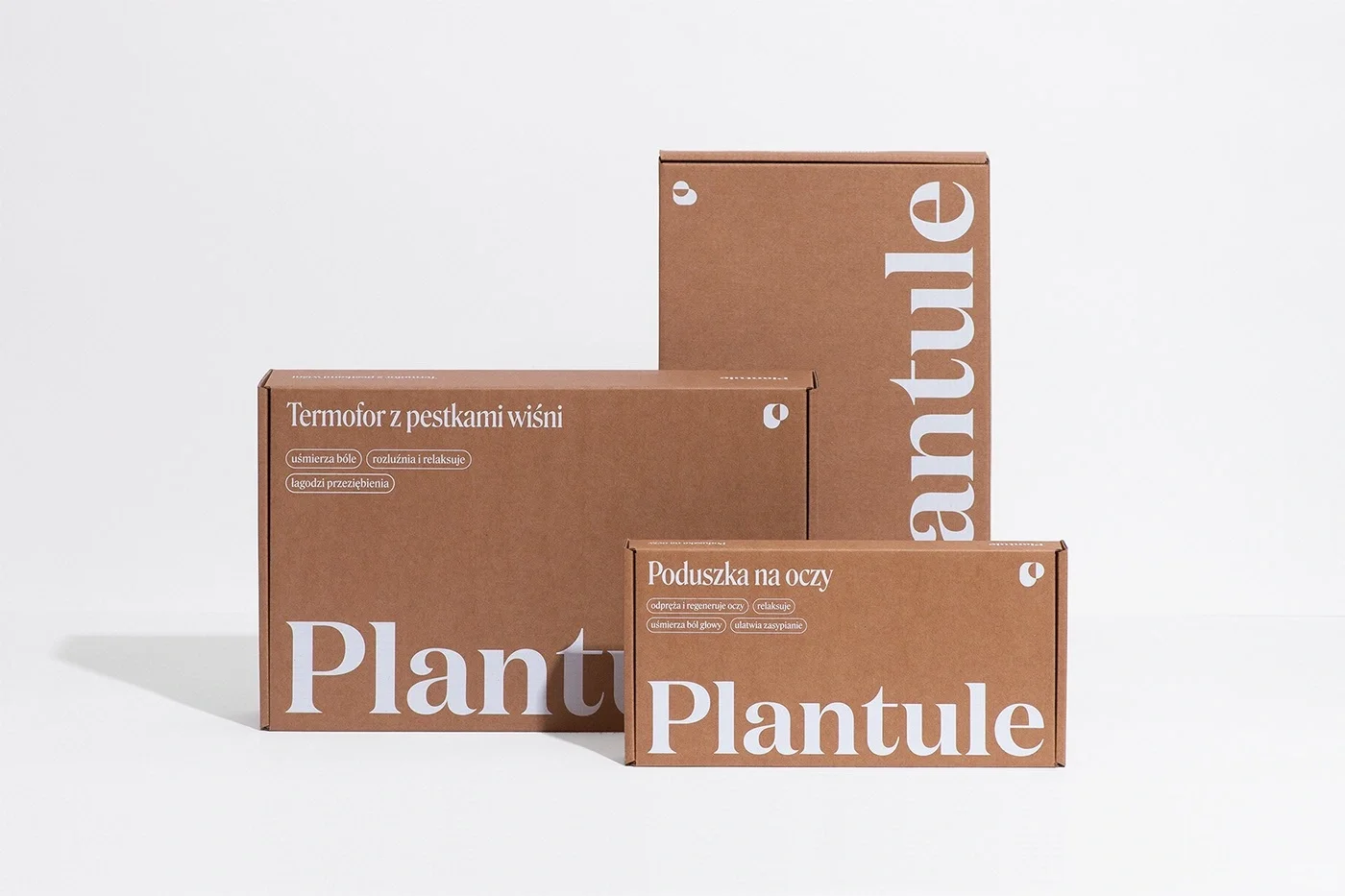
Paper packaging has long become the core choice for brands to achieve environmental upgrading. Many brands face cost obstacles when promoting packaging transformation—they want to switch to more sustainable paper packaging and achieve Plastic-to-Paper Transition, but worry about rising material and processing costs, so they give up adjustments. In fact, a smooth transition from plastic to paper does not require extra budget. Based on years of experience in packaging customization and manufacturing, Shengcai has developed a complete set of practical ideas covering design to supply chain, focusing on Cost-neutral Sustainability, ensuring cost neutrality or even slight savings in every step.
The core logic of replacing plastic without additional investment is to convert hidden waste in the packaging chain into cost space for paper upgrading. Combined with structural and supply chain optimization, the overall cost of paper packaging can be fully comparable to traditional plastic packaging. Most brands only focus on raw material unit price comparison, ignoring the linked cost differences in processes, storage and logistics, which is why many people think paper packaging is more expensive. The popularization of Circular Economy Packaging has made paper packaging the optimal solution that balances environmental protection and cost, which not only conforms to market trends but also enhances brand core competitiveness.
We can start by cutting redundant links of over-packaging, and use the saved costs to subsidize high-quality paper materials. A large number of products on the market have unnecessary plastic redundant designs, which not only have no practical value but also continuously drive up overall expenses.
Redundant plastic packaging links that can be directly simplified:
- Remove multi-layer plastic films and adopt integrated paper laminating process to retain protection while reducing plastic use
- Cancel independent plastic buffer liners and replace them with integrated structural paper protection design without additional buffer materials
- Delete redundant plastic labels and fixed buckles, and integrate them into direct box printing to reduce process and material waste
The costs saved by eliminating these redundancies are sufficient to cover the raw material price difference of high-quality eco-friendly paper packaging, forming a cost-neutral formula without extra investment. Although this logic seems simple, it requires professional design planning. With mature solutions, Shengcai has helped many brands achieve zero-cost redundancy reduction.
The key to material replacement is not simple substitution, but making paper solutions more advantageous through structural innovation. The technical details of structural replacement directly determine the balance between cost control and protection effect—which is the core area where Shengcai has focused for many years. In terms of buffer materials, the advantages of honeycomb paper cushioning packaging compared with traditional bubble wrap are very obvious, with specific data as follows:
| Comparison Dimension | Honeycomb Paper | Bubble Wrap | Core Advantage |
| Compressive Strength | Deformation rate under vertical pressure is about 30% lower | Higher deformation rate under vertical pressure | Honeycomb paper provides more stable protection and reduces product damage |
| Space Occupation | The volume of unstretched honeycomb paper roll is only 1/5 of bubble wrap with the same protection | Large volume, occupying a lot of storage space in unstretched state | Honeycomb paper greatly saves storage and transportation space |
| Production Efficiency | No adhesive fixing required, can be directly cut and used | Needs cutting and pasting, cumbersome process | Honeycomb paper reduces labor costs and improves production efficiency |
| Environmental Friendliness | 100% recyclable and degradable, no environmental pollution | Hard to degrade, easy to produce plastic waste | Conforms to the concept of Circular Economy Packaging and enhances brand image |
In addition to the optimization of buffer materials, one-piece folding cartons can directly replace the “plastic box + independent label” combination. Through Dieline Optimization, the integrated design of the box body and logo is realized. One-piece molding and printing save processes such as mold opening and separate labeling, greatly reducing labor costs.Paper aircraft box transport packaging adopts tape-free folding design, replacing plastic straps and fixed accessories, adapting to transport protection needs of various products, and further simplifying the packaging process.
Most paper packaging supports flat folding storage. Compared with plastic packaging with fixed structures, storage space utilization can be increased by more than 70%, greatly reducing long-term storage rental expenses. At the same time, paper packaging is lighter in weight, which effectively reduces the comprehensive transportation cost of single goods in logistics. The savings in this part are enough to offset the small price difference between paper and plastic. Actually, many brands ignore this part of hidden costs, which is precisely the key to achieving cost-neutral transformation.
On the supply chain side, a reasonable MOQ strategy for custom paper gift boxes can directly lower the unit price of paper procurement. Centralized bulk procurement of eco-friendly paper materials can reduce raw material costs by 12%-18%. Cooperating with automated production lines to control paper loss within 4% further compresses production costs. Shengcai’s supply chain team customizes exclusive bulk plans according to product cycles and ordering plans, reducing the risk of paper price fluctuations bylocking annual MOQ strategies, making the unit price of paper packaging gradually close to the level of traditional plastic packaging.
To help brands quickly implement zero-cost transformation, Shengcai has sorted out an exclusive 「Actionable Checklist for Zero-Cost Transition」, which brands can directly follow without additional investment in professional teams:
- [ ] Step 1: Remove Redundancy. Can independent plastic films be canceled? (Expected cost saving: 5% ~ 8%)
- [ ] Step 2: Integration. Can the structure be optimized from “box + inner tray” to “one-piece molding”? (Reduce manual assembly time by about 25%)
- [ ] Step 3: Flattening. Does the design support 100% flat transportation? (Increase single warehouse storage density by 70%+)
- [ ] Step 4: Centralization. Is the annual MOQ strategy locked to reduce the risk of paper price fluctuations?
A cooperative brand previously used plastic bubble bags and plastic trays for packaging, which had weak environmental performance and occupied a lot of storage space. Optimized by Shengcai, the brand completely switched to paper packaging combinations, using honeycomb paper cushioning with one-piece gift boxes, eliminating all plastic accessories, and optimizing die-cutting line design to improve production efficiency. Finally, the overall packaging cost remained the same as before, product texture was improved, and market feedback was more positive, truly realizing Cost-neutral Sustainability.
Many people wonder whether the moisture resistance and durability of paper packaging can meet long-term use needs? To address this core pain point, we have sorted out detailed answers with specific data for reference:
FAQ
Q1: Is the protective performance of paper packaging comparable to plastic?
A1: Paper packaging with honeycomb paper cushioning packaging and corrugated structure has complete compression and cushioning capacity to meet daily transportation and gift packaging needs, no worse than plastic. In particular, the deformation rate of honeycomb paper under vertical pressure is 30% lower than that of bubble wrap, with better protection stability and reduced product damage rate.
Q2: Will small-batch custom paper packaging be more expensive?
A2: Relying on Shengcai’s flexible production model, reasonable MOQ planning, and simplifying production processes through Dieline Optimization, costs can be controlled in small batches without significant premium. At the same time, we will optimize supply chain solutions according to order volume to further compress hidden costs.
Q3: Can the moisture resistance of paper packaging really match that of plastic?
A3: It is definitely true in 90% of logistics scenarios. By applying nano-scale eco-friendly Bio-coating on the surface of base paper, the Cobb value (water absorption) of paper packaging can be controlled below 30g/m², fully meeting the needs of cross-sea transportation for more than 30 days without affecting 100% recyclability, which conforms to the development trend of Circular Economy Packaging.
Q4: Does realizing Plastic-to-Paper Transition require a lot of time to adjust the production line?
A4: No. Shengcai provides one-stop implementation services, assisting brands in adjustment from structural design, die-cutting line optimization to production adaptation, without additional transformation of the production line. Usually, sample confirmation can be completed within 1-2 weeks, and mass production can be realized quickly.
| Cost & Performance Dimension | Traditional Plastic Packaging | Paper Packaging | Core Cost Optimization Logic |
| Raw Material Procurement Cost | Low base price with high processing cost | Controllable high-quality paper with integrated process | Eliminate redundant processes to balance price differences |
| Storage Space Occupation | Fixed structure with low space utilization | Flat foldable with 70%+ higher utilization | Reduce long-term storage rental expenses |
| Production Process Complexity | Multi-links including molding, assembly and labeling | One-piece molding with 30% simpler processes | Lower labor and time costs |
| Transportation Weight Cost | Heavy weight with high transportation cost | Lightweight design with lower transportation cost | Logistics savings subsidize paper materials |
| Environmental & Market Adaptability | Weak eco-friendliness with low acceptance | Recyclable and degradable, in line with Circular Economy Packaging trends | Enhance brand value without extra investment |
| Moisture Resistance (Cobb Value) | No water absorption, strong moisture resistance | ≤30g/m² after treatment, suitable for most scenarios | Nano-coating technology, no extra cost |
Switching to paper packaging and promoting Plastic-to-Paper Transition is not a choice that increases operating costs, but a win-win solution to achieve cost control, environmental upgrading and brand texture improvement by reconstructing the entire packaging design, production, and logistics chain. Shengcai specializes in packaging customization and manufacturing services, focusing on the field of Circular Economy Packaging. From structural design, Dieline Optimization, supply chain planning to production implementation, we provide one-stop solutions. Relying on the exclusive Actionable Checklist for Zero-Cost Transition, we help brands smoothly complete the comprehensive upgrade from plastic to paper packaging without increasing costs, realizing Cost-neutral Sustainability.