
 English
 简体中文
简体中文 Español
 Français
 Deutsch
 Русский
 Português
 Italiano
 日本语
日本语 한국어
한국어 العربية
 Türkçe
 Tiếng Việt
 ไทย
ไทย Indonesia
 Melayu
Competition in the beauty industry has long gone beyond product formulas alone. When consumers pick up a bottle of high-end skincare products, the “first impression” they encounter first often comes from the packaging. In 2026, Luxury Skincare Packaging plays an even more crucial role—it must not only uphold the brand’s luxurious tone but also meet consumers’ dual expectations for functionality and sustainability. Miss either one, and you might lose potential customers. As an enterprise specializing in gift box and bag manufacturing, Shengcai has recently worked with many high-end brands and found that everyone is asking the same question: How to grasp this year’s packaging trends to stay relevant?
Speaking of which, “sustainability” is no longer a new term, but sustainable luxury skincare packaging in 2026 has brought new ideas—it’s no longer just using kraft paper as a perfunctory solution, but adopting high-quality recycled paper with better texture, and even the inner supports need to be completely plastic-free. A while ago, a client was struggling with the fact that traditional EVA inner supports were not eco-friendly, yet switching to ordinary paper supports would risk looking cheap. Shengcai’s solution was pulp-molded inner supports, made from recycled pulp through a special process. They feel smooth and stiff, and fit the bottle perfectly. When the client received the sample, they said, “This is the luxury that sustainability should have.” After all, today’s consumers are sharp—talking about sustainability isn’t enough; you have to let them feel and see the “luxury.”
The phrase “less is more” fits perfectly with this year’s minimalist luxury skincare packaging. Designs with excessive printing and stacked decorations tend to look tacky instead. True luxury lies in the detailed textures. Shengcai’s design team has recently been recommending UV technology and debossing to clients—for example, adding partial UV printing on the surface of a white gift box, which gives a soft sheen when light hits it. Combined with debossed brand logos, no extra colors are needed, and you can feel the texture just by running your fingertips over it. A brand that makes serums tried this design, and they reported that consumers would deliberately touch the box surface when unpacking. Isn’t this kind of “unintentional tactile memory” more touching than complex patterns?
Today’s consumers are not satisfied with just “looking” at the packaging—they want to “interact” with it, which has given rise to the popularity of interactive luxury skincare packaging. The most practical feature is integrating QR codes; a quick scan allows consumers to check authenticity, watch product usage videos, or even participate in brand membership activities. However, many brands worry about the quality of variable data printing—after all, each QR code must be clearly scannable without affecting the overall aesthetics. Shengcai’s variable data printing technology solves this problem: it can accurately print unique QR codes on gift boxes or bottle labels, with colors and clarity that blend seamlessly with the packaging design, making them neither obtrusive nor impractical. Imagine this—after scanning the code, consumers learn the correct way to massage with the serum; won’t that make them more convinced of the brand’s professionalism?
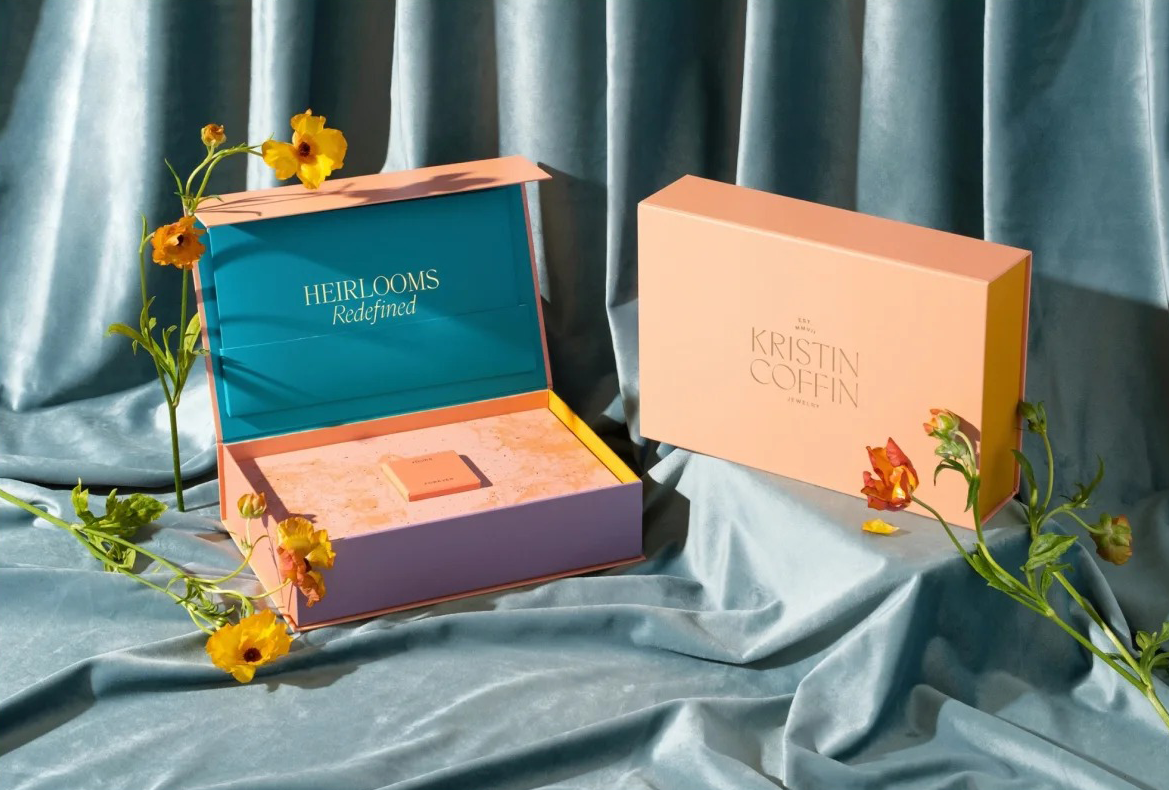
What’s the ultimate goal of unpacking experience? Maybe it’s “not throwing it away after use.” In 2026, multi-functional luxury skincare packaging is emphasizing reusability. Take the magnetic book-style box designed by Shengcai as an example: you can feel the smooth feedback of the magnetic clasp when opening it. It holds skincare products inside, and after use, you can close the box and use it as a bathroom organizer for samples or makeup brushes. A brand that makes face cream used this design, and their backend received many consumer photos with comments like “I hate to throw away the box more than the cream.” This design not only extends the packaging’s lifespan but also adds a “daily touch” to the brand-consumer connection, making it much more memorable than disposable packaging.
2026 Core Trends Comparison Table for High-End Skincare Packaging
| Core Trend | Key Technical Support | Shengcai Solution | Consumer Value |
|---|---|---|---|
| Sustainable Luxury | High-quality recycled paper, pulp molding | Plastic-free pulp-molded inner supports, recycled paper gift boxes | Eco-friendly without compromising texture |
| Minimalist & Tactile Design | UV technology, debossing | Partial UV printing + debossed brand logo | Memorable tactile experience, more high-end visual effect |
| Interactive Packaging | Variable data printing, QR codes | High-definition variable QR code printing | Anti-counterfeiting + learning, enhancing brand trust |
| Multi-functional Unboxing | Magnetic structure, storage design | Magnetic book-style box (reusable as organizer) | Extending service life, improving brand favorability |
Common Questions About 2026 High-End Skincare Packaging
Q1: I want to make sustainable packaging, but I’m worried that recycled materials can’t convey a luxurious feel. What should I do?
This concern is quite common, but choosing the right process can solve it. For example, the high-quality recycled paper used by Shengcai, after special treatment, has stiffness and smoothness comparable to virgin paper. When paired with the three-dimensional shape of pulp-molded inner supports, it feels and looks luxurious. A brand positioned as light luxury once used recycled paper for gift boxes with embossed hidden patterns—consumers didn’t even realize it was recycled paper; instead, they thought “this understated texture is unique.”
Q2: Will interactive packaging add extra costs? Is it complicated?
It doesn’t necessarily add much cost; the key is choosing the right solution. Shengcai’s variable data printing technology is quite mature and can be directly integrated into existing production processes without additional equipment. For example, printing QR codes on the side of gift boxes only requires one extra step of data import during the printing process, with limited cost increase. However, it brings consumers the sense of security from “scanning to check authenticity,” which in turn enhances the product’s added value.
Q3: Will the design cycle for multi-functional packaging be very long?
No. Shengcai has a dedicated design team that quickly creates proposals based on brand needs. For example, the team already has mature structural templates for magnetic book-style boxes. They only need to adjust the size and color according to the brand’s preferences, and samples can usually be produced within 1-2 weeks. A client once needed to rush a quarterly new product launch; from confirming the design to receiving the sample, it only took 10 days, which didn’t delay the launch at all.
The Luxury Skincare Packaging of 2026 is essentially “consumer-centric” packaging—it understands consumers’ concern for sustainability, their pursuit of texture, and their expectation for “small surprises.” Having been in the packaging industry for years, Shengcai has always believed that good packaging is not about “showing off skills” but about “being thoughtful”: using sustainable materials to reduce the brand’s burden, using detailed craftsmanship to highlight the brand’s luxury, and using multi-functional design to retain customers for the brand. If your brand is also looking for this year’s packaging direction, feel free to talk to Shengcai’s design team—their free design proposals may bring you new inspiration.