

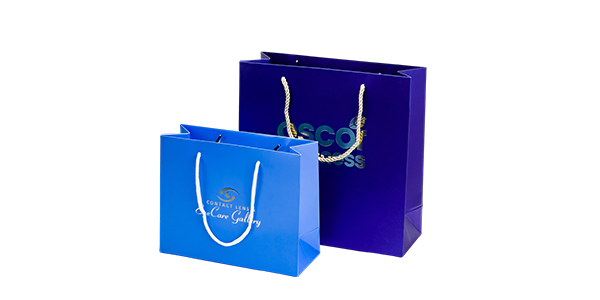
Sudden breakage of handbag handles not only damages the products inside the packaging but also directly affects brand reputation — this is the biggest concern for many B-end purchasers when customizing handbags in bulk. As a manufacturer focusing on gift boxes and bags, Shengcai’s internal quality inspection standards refer to and are stricter than China’s packaging industry standard QB/T 4379-2021 (Paper Shopping Bags) and international standard ISO 11093. We take the tensile test of handbag handles as a core mandatory test item before each batch of products leaves the factory, and the entire process from material selection to test procedures is fully aligned with the bulk customization and quality control needs of B-end customers.
The requirements for handbag load-bearing vary greatly depending on the weight of different products and circulation scenarios. Blindly choosing handle materials and specifications is likely to lead to the problem of “meeting static standards but being easy to break in actual use”. Combined with the requirements of QB/T 4379-2021 standard and years of B-end customization experience, we have sorted out a structured handbag load-bearing grade comparison table, which accurately matches the packaging needs of various products and facilitates purchasers to quickly select models:
| Load-bearing Grade | Recommended Load-bearing Upper Limit | Typical Application Products | Recommended Handle Material and Specification |
|---|---|---|---|
| Light | Below 5kg | Summer T-shirts, cultural and creative tapes, light food bread, small cosmetic samples | Single-strand twisted paper rope (diameter 3-4mm), suitable for automated mass production |
| Standard | 5kg – 12kg | Skin care gift boxes, thick sweaters, high-end electronic products, health care product sets | Three-strand cotton rope or polyester-cotton rope (diameter 5mm), balancing texture and durability |
| Heavy | 12kg – 25kg | 1.5L*2 bottled wine, grain and oil gift packages, coats, large gift sets | Thickened cotton rope + rivet reinforcement + 2.5mm base plate, improving load-bearing stability |
Many B-end purchasers feedback that the samples of handbags received meet static test standards, but frequently break “while being carried” in actual circulation — this is precisely because the importance of dynamic fatigue testing is ignored. In the quality inspection link, in addition to strictly conducting static breaking tests in accordance with QB/T 4379-2021 standard, Shengcai also specially introduces Jerk Test (lifting fatigue test) to accurately simulate real usage scenarios: place a load 1.2 times the rated weight in the bag, oscillate up and down at a frequency of 30 times per minute to restore the bumpy and shaking trajectory of human walking, and test continuously for more than 60 minutes to ensure that the connection nodes of handbag handles do not shift, loosen or break, fundamentally solving the after-sales concerns of B-end customers.
The core of both static testing and fatigue testing is inseparable from the control of key parameters of handle materials — namely breaking strength and elongation. In Shengcai’s laboratory, after thousands of actual tests, we found that paper rope handbag handles have extremely high breaking strength in a dry environment, even reaching 1.2 times that of some cotton ropes, but they are extremely sensitive to moisture, and the breaking strength will drop by more than 30% after being damp; in contrast, cotton rope handbag handles have slightly lower breaking strength but stronger elastic recovery rate, and are not easy to deform after repeated lifting.
This is particularly important for export orders, such as orders in high-humidity areas in Southeast Asia or sea freight orders. Paper bags are prone to dampening and softening during transportation, which can easily lead to “tear-type breakage”. For such needs, Shengcai will take the initiative to provide B-end customers with solutions in the process design stage — it is mandatory to recommend installing metal eyelets at the handbag handle holes, and optimize the reinforcement process around the holes at the same time, increasing the connection strength between the handle and the bag body by 40%, which not only meets the export requirements of ISO 11093 international standard but also avoids customer complaints caused by transportation damage.
In fact, many B-end customers confuse the difference between “breaking strength” and “actual load-bearing” when customizing handbags, and even think that “the higher the breaking strength, the better”. In reality, the two are not proportional: breaking strength is the material limit of the handle itself, while actual load-bearing is also affected by the connection process between the handle and the bag body, bag material, usage scenarios, etc. Shengcai’s quality inspection team will set exclusive test parameters for each batch of customized orders according to the actual needs of customers and QB/T 4379-2021 standard, ensuring that the force performance of the handle is better than the industry benchmark, and avoiding cost waste caused by over-design.
In addition to test procedures and material selection, the handbag handle reinforcement process is also a key concern of B-end customers. Combined with different load-bearing levels, we adopt a hierarchical reinforcement scheme to balance durability and aesthetics:
- Lightweight handbags: Single-strand paper rope is directly bound with hot-melt adhesive reinforcement, suitable for automated mass production, balancing efficiency and cost
- Standard handbags: Three-strand cotton rope + double-layer sewing reinforcement, non-woven gaskets are added at the handle holes to disperse force and avoid hole tearing
- Heavy handbags: Thickened cotton rope + double rivet reinforcement, a 2.5mm thick base plate is added inside the bag body to evenly distribute the weight to the entire bag body, eliminating single-point force breakage
Common B-end Customization FAQs (Addressing Purchasing Pain Points)
1. Can we provide tensile test reports complying with QB/T 4379-2021 or ISO 11093 standard when customizing handbags in bulk?
Absolutely. Shengcai provides exclusive quality inspection reports for each batch of bulk orders, clearly marking key parameters such as the breaking strength, elongation, and fatigue test results of handbag handles, along with standard compliance instructions, to meet customers’ needs for inspection, warehousing and export compliance.
2. For export orders to high-humidity areas, are there any other solutions to improve the durability of handbag handles besides installing metal eyelets?
Yes. According to customer needs, we can provide water-repellent treatment for paper rope handbag handles to reduce the impact of moisture on the material; if the budget allows, we can also recommend polyester-cotton blended rope, which combines the soft texture of cotton rope and the moisture-proof performance of polyester, suitable for various complex transportation scenarios.
3. During the sample stage, can we customize an exclusive handbag handle tensile test plan and provide actual test data according to the weight of our products?
Of course. Shengcai supports sample customization and exclusive testing. According to the product weight provided by customers, we will match the corresponding load-bearing grade and handle material, and simultaneously provide real-time data and videos of static breaking tests and fatigue tests, allowing customers to clearly understand product quality before mass production and avoid batch risks.
4. Is there a big cost difference between handbag handles of different load-bearing grades in mass production? How to balance quality and budget?
The cost difference mainly depends on the material and reinforcement process. The cost difference between lightweight and standard grades is about 15%-20%, and the cost difference between standard and heavy grades is about 25%-30%. We will recommend the optimal plan according to the customer’s budget, product positioning and usage scenarios, such as choosing paper rope for lightweight orders to reduce costs and cotton rope for high-end orders to improve texture, which not only does not sacrifice quality but also controls the budget.
For B-end purchasers, the quality of handbags is not only the packaging itself but also an extension of the brand image. With years of deep cultivation in packaging manufacturing, Shengcai has always taken QB/T 4379-2021 and ISO 11093 standards as the benchmark, and refined every detail of the tensile test of handbag handles to the extreme. From material selection and process optimization to test procedures, the entire process fits the bulk customization needs of B-end customers, making every handbag balance beauty, practicality and durability, helping customers enhance brand reputation.