

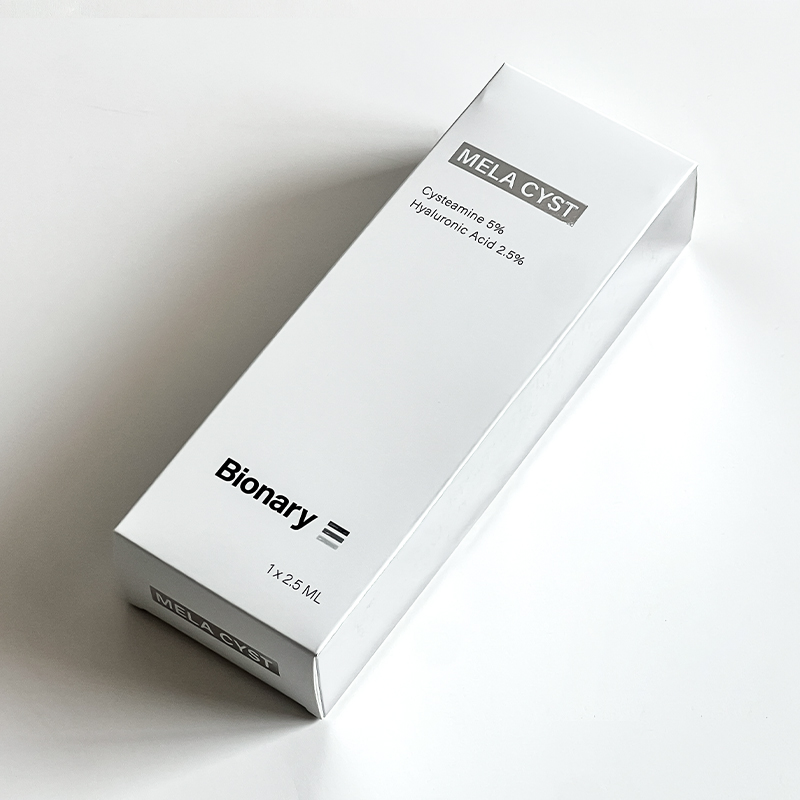
In Skincare Packaging, three-dimensional embossing processes are no longer just decorative tools, but key carriers for brands to convey texture and build visual recognition. Embossing and debossing, as two core tactile techniques, directly determine the hand feel and visual hierarchy of luxury skincare gift box packaging, and are also the most confusing parts for many design teams and purchasers during customization. Choosing the wrong process will not only reduce the packaging texture, but also cause a series of problems such as production loss and defective products. With years of experience in custom production of gift boxes and gift bags, Shengcai has developed a mature implementation system for skincare tactile packaging techniques, providing practical professional solutions for skincare brands from process selection, paper matching to mass production.
1. Core Parameter Comparison Table of Embossing and Debossing
There are obvious differences between the two processes in vision, material adaptation, cost and other dimensions. This comparison table helps you quickly lock in the appropriate solution and avoid selection mistakes:
| Comparison Dimension | Embossing | Debossing |
|---|---|---|
| Visual Presentation | Patterns protrude outward with intuitive and strong three-dimensional sense, suitable for highlighting core visual elements | Patterns sink inward with restrained and subtle texture, suitable for minimalist and low-key design styles |
| Light and Shadow Hierarchy | Outstanding contrast of light and dark under light, high compatibility with metal techniques (gold stamping, silver stamping), more prominent sense of luxury | Soft and delicate shadows, more suitable for matte and solid-color packaging, highlighting low-key premium sense |
| Impact on Paper Fibers | Mild fiber stretching, more stable effect on thick paper, easy deformation and bulging on thin paper | Fiber compression molding, lower requirements for paper toughness, no easy fraying or damage at edges |
| Mold Precision Requirements | High, need to accurately match the three-dimensional radian, edges are prone to blurriness and burrs due to insufficient precision | Medium to high, shallow debossing has higher fault tolerance for molds, deep debossing needs to control edge flatness |
| Applicable Paper Gram Weight | 150gsm—400gsm hard card and special paper; the higher the gram weight, the more stable the three-dimensional effect | 120gsm—350gsm conventional card paper and art paper; shallow debossing can also be achieved on thin paper |
| Applicable Packaging Types | Skincare sets, luxury gift boxes, brand LOGO main vision, limited-edition packaging | Single product hose outer boxes, simple skincare paper bags, sample packaging, daily gift boxes |
| Comprehensive Production Cost | High mold cost, slightly long production debugging time; unit cost can be reduced after mass production | Affordable mold cost, higher mass production efficiency, suitable for large-scale conventional packaging customization |
| Post-adaptation Process | Can be matched with gold stamping, UV, and film coating; need to control the process order to avoid texture damage | Stronger adaptability; can be matched with local stamping and textured paper, less prone to process conflicts |
2. Skincare Packaging Process Matching Schemes for Different Brand Styles
Combined with the positioning of mainstream skincare brands in the market, we have sorted out process combinations more suitable for actual needs, avoiding blind selection, while balancing texture and cost control. Each scheme has been verified by Shengcai through thousands of productions:
- Minimalist natural skincare brands: Prioritize Blind Debossing, paired with matte art paper, creating a high-end sense through delicate concave lines without redundant decorations. Suitable for minimalist skincare packaging, it can not only highlight the brand’s natural tone but also control customization costs.
- Light luxury efficacy skincare brands: Local embossing paired with silver stamping, highlighting core ingredient logos or brand LOGOs, balancing texture and recognition. Suitable for efficacy-based skincare gift boxes, it allows the core advantages of products to be directly conveyed through packaging, enhancing consumer trust.
- High-end luxury skincare brands: Full-page embossing combined with gold stamping to enhance the three-dimensional metallic sense, paired with special textured paper, meeting the needs of 3D craft design for high-end skincare gift boxes, highlighting the brand’s luxury tone, suitable for customizing sets and limited-edition packaging.
- Basic line skincare brands: Small-area debossing embellishment, paired with cost-effective white card or coated paper, improving packaging details while controlling costs. Suitable for affordable skincare packaging customization, balancing practicality and aesthetics, meeting the needs of large-scale mass production.
Speaking of which, many purchasers and designers fall into a misunderstanding when customizing—blindly pursuing complex processes but ignoring the compatibility between paper and processes. For example, paper below 120gsm has insufficient toughness; embossing will directly cause bulging on the back of the packaging, damaging the overall flatness. Debossing is prone to fiber breakage and edge fraying, and even damage in severe cases, affecting subsequent packing and transportation. When connecting custom embossing solutions for skincare packaging, Shengcai first matches the paper gram weight according to process requirements and packaging purposes, and even provides paper sample comparisons to eliminate such basic problems.
Many customers also feedback that some embossed finished products have blurry edges, completely lacking the delicacy shown in the design drawings. This situation mostly stems from two problems: first, insufficient mold engraving accuracy with burrs on the edge of lines; second, unbalanced production pressure—excessive pressure will squeeze lines and cause deformation, while insufficient pressure cannot present a clear three-dimensional effect. Shengcai adopts high-precision laser engraving molds combined with CNC pressure debugging equipment, and conducts 3-5 proofing calibrations before each batch of production to ensure sharp and clean edges of embossed lines, restoring the original design intention, which is also the practical experience we have accumulated over the years.
3. Additional Detail Control in Process Implementation
In addition to core process differences, paper texture, ink matching, and later box gluing procedures also directly affect the final finished product effect. These details are often overlooked by many manufacturers and are the core advantages of Shengcai:
- Paper Texture Adaptation: Special paper with natural texture (such as kraft paper, textured paper) can form a more unique texture after debossing, highlighting the natural tone; smooth coated paper and matte card paper are more suitable for embossing, which can maximize the three-dimensional effect and reduce the problem of blurred lines.
- Ink and Process Matching: It is best to avoid large-area bright film coating after embossing and debossing, otherwise, the tactile feeling will be weakened. If film coating is needed, it is recommended to choose matte film, which can not only protect the packaging but also retain the tactile advantage of the process—a point that many novice designers easily overlook.
- Box Gluing Process Connection: If the embossed lines are too close to the edge of the packaging, creases and damage are likely to occur during box gluing. Shengcai’s design team plans the embossing area in advance, reserving a reasonable box gluing space, balancing visual effect and practicality.
For skincare brands pursuing differentiation, we also support the combined customization of embossing, debossing with gold stamping, UV, film coating, local hollowing and other processes to create exclusivecustom gift boxes for skincare packaging. We provide one-on-one follow-up services from design communication, proofing confirmation to finished product delivery, solving the whole process of process selection, production implementation, quality control and other issues, so that each packaging can accurately match the brand positioning, while controlling production loss and improving delivery efficiency.
4. Frequently Asked Practical Questions
Combined with the actual needs of years of cooperation, we have sorted out the most common questions in the procurement and design links, and given practical solutions in straightforward expressions to help everyone avoid detours:
- Q1: Which is more suitable for long-term mass production, embossing or debossing? In fact, there is no absolute advantage or disadvantage; it mainly depends on brand needs and cost budget. For conventional and large-scale mass-produced skincare packaging, debossing is more suitable—it has low mold cost, high production efficiency, and lower loss rate. For high-end and limited-edition products that pursue a strong three-dimensional texture, embossing (can be paired with gold stamping) is more able to highlight the brand tone. Although the initial mold and debugging costs are slightly higher, it can increase product premium. Shengcai will give more suitable process suggestions according to the customer’s mass production scale and budget.
- Q2: What problems will occur when the embossing process is applied to too thin paper (below 120gsm)? How to avoid them? There are two main problems with embossing on thin paper below 120gsm: embossing will cause bulging on the back of the paper, damaging the packaging flatness—the larger the pattern area, the more obvious the bulging; debossing is prone to fiber breakage and edge fraying, and even holes in severe cases, affecting packaging tightness and aesthetics. The solution is simple: prioritize paper of 120gsm and above. If thin paper must be used due to design needs, choose shallow debossing and reduce the embossing area. Shengcai can provide proofing services for thin paper embossing to verify the effect in advance.
- Q3: Why do some embossing effects look “blurred at the edges”? How to ensure clear lines? There are two core reasons—which is also the key to distinguishing the quality of the process: mold precision and pressure control. Insufficient mold engraving accuracy with burrs on the edge of lines will naturally lead to blurriness after embossing. Even if the mold meets the standard, excessive or uneven pressure during embossing will squeeze lines and cause deformation. Shengcai uses high-precision laser engraving molds combined with an intelligent pressure control system, and conducts proofing calibration before each batch of production, while controlling the uniformity of paper thickness, ensuring sharp and clean edges of embossed lines from the source.
- Q4: Will embossing affect the stacking strength of the packaging box? How to avoid it? Under normal process design, local shallow embossing hardly affects the stacking strength. Only large-area and deep embossing on the load-bearing sides of the packaging box will slightly reduce its structural strength, affecting storage and transportation. Shengcai’s design team plans the embossing area in advance, actively avoiding the load-bearing areas of the packaging, and optimizing the embossing depth, ensuring both visual effect and practical performance of the packaging, especially suitable for packaging needs that require long-distance transportation and large-scale stacking.
- Q5: What is the approximate production cycle for embossing and debossing processes? How to control the loss rate in mass production? The production cycle mainly depends on mold production and mass production scale: mold production usually takes 3-5 days, small-batch production (1000-5000 pieces) can be delivered in 7-10 days, and large-batch production (more than 10000 pieces) can be delivered in 10-15 days. Shengcai can optimize the production process and shorten the delivery time according to the customer’s schedule requirements. In terms of loss rate, through precise mold debugging, paper screening and production control, we control the loss rate of mass production within 3%, which is much lower than the industry average, effectively helping customers reduce costs.
- Q6: Can embossing and debossing be used with other processes (such as gold stamping, UV)? Will there be process conflicts? It can be used together completely, and reasonable matching can make skincare packaging more layered, but the key is to control the process order. The correct order is usually: first film coating (if needed), then embossing (embossing/debossing), and finally gold stamping and UV. This can avoid subsequent processes damaging the embossed lines. With rich experience in process combination, Shengcai can optimize the process order according to the design scheme, eliminating conflicts such as gold peeling, blurred lines and UV peeling, so that each process can play the best effect.
The process creation of Skincare Packaging is never an isolated aesthetic choice, but a precise combination of process, paper, brand tonality and production implementation. Specializing in the customization and manufacturing of various gift boxes and gift bags, Shengcai has been deeply engaged in packaging processes for many years. From process selection, paper matching to production implementation, we provide customized solutions for skincare brands throughout the whole process. With high-precision mold production, strict quality control and efficient delivery capacity, we help brands create skincare packaging gift boxes with both aesthetic value and practicality, creating unique visual and tactile memory points for brands with details, and helping brands stand out in the fierce market competition.